Bến Tre expands hi-tech shrimp farming area
Update: Mar 11, 2023 - 12:42 (GMT+7)


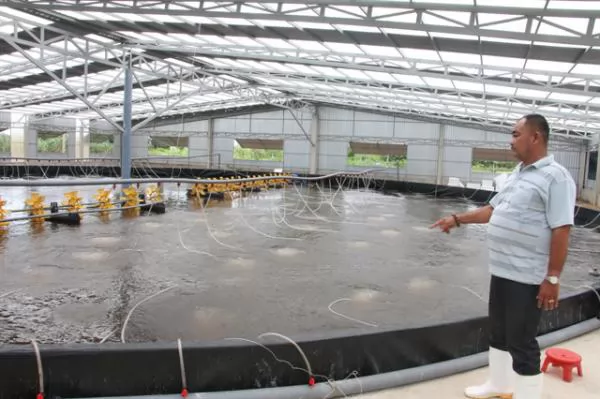
Shrimp is bred under hi-tech farming method in Bến Tre Province's Thạnh Phú District. - VNA/VNS Photo Công Trí
Bến Tre plans to develop at least 500ha of new hi-tech farming areas for breeding brackish-water shrimp this year.
BẾN TRE – Bến Tre plans to develop at least 500ha of new hi-tech farming areas for breeding brackish-water shrimp this year.
The Cửu Long (Mekong) Delta province also aims to attract more investment in producing and processing seafood, especially shrimp.
Trần Ngọc Tam, chairman of its People’s Committee, said to achieve the targets the province would encourage farmers to tie up with companies for developing concentrated hi-tech shrimp farming areas to serve exports.
The coastal province’s Department of Agriculture and Rural Development said the potential to develop aquaculture, especially brackish-water shrimp, is enormous.
Its shrimp farming areas are mostly in Bình Đại, Ba Tri and Thạnh Phú districts.
Lê Văn Sấm, a farmer in Thạnh Phú’s Thạnh Hải Commune, said he uses modern super intensive farming techniques to breed shrimp, and his ponds have a density of 200-250 shrimp per square meter.
He harvests around 80 tonnes of shrimp per hectare per harvest and a tonne fetches VNĐ50-70 million (US$2,100 - 3,000), he said.
Bến Tre has identified 11 areas for developing concentrated hi-tech shrimp farming areas also in Bình Đại, Ba Tri and Thạnh Phú districts this year.
They will use two-stage industrial farming and other hi-tech models.
The former is based on super intensive farming and has multiple ponds for breeding shrimp and treating water. The breeding ponds are equipped with oxygenation equipment, anti-sunlight nets and plastic sheets covering their beds.
Nguyễn Văn Buội, deputy director of the department, said farmers have switched from traditional intensive and semi-intensive shrimp farming methods to hi-tech models in recent years.
The hi-tech models such as two-, three- and four-stage industrial shrimp farming offer high yields of 12 tonnes per hectare per harvest and farmers could harvest three times a year, he said.
The yield is about four times as from traditional methods, and farmers earn VNĐ700-800 million ($30,000-34,000) per hectare per crop, he said.
The model is also disease-resistant and environment-friendly, and adapted to climate change.
Besides developing the concentrated shrimp farming areas, the province will also establish hi-tech shrimp co-operatives that will link up with companies to develop value chains.
Bến Tre has 13 plants that mostly process clam and tra fish products and none for brackish-water shrimp.
Last year the province developed 567ha of new hi-tech shrimp, taking its total area to 2,600ha with an average yield of 40-60 tonnes per hectare, according to the department.
It plans to have a total of 4,000ha of hi-tech shrimp farming in 2025. – VNS
Maybe you are interested
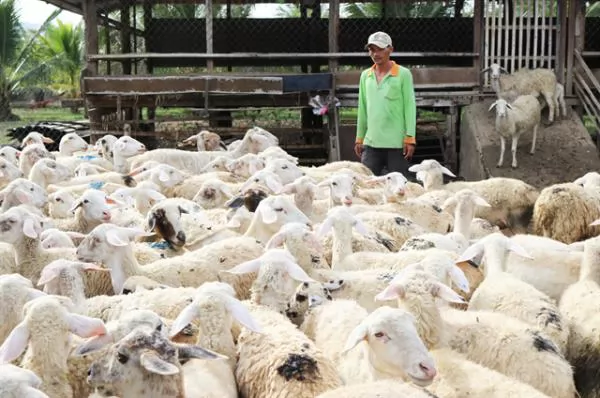
Ninh Thuận raises baa for sheep farming
NINH THUẬN - The south - central province of Ninh Thuận has raised sheep breeding to an industrial scale using advanced techniques to improve productivity and value.
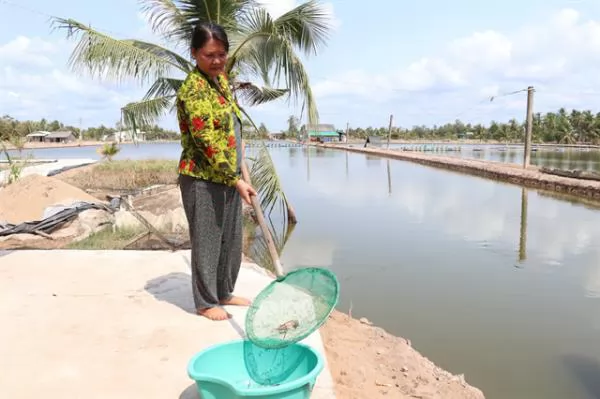
Bến Tre Province giant river prawn farms hit by saltwater intrusion
BẾN TRE - Many farmers raising giant river prawns in the Cửu Long (Mekong) Delta province of Bến Tre are facing losses due to saltwater intrusion, which is decimating the crustaceans.
Vietnamese beef cattle breed favored by China
(VAN)- The Vietnamese yellow cattle that seemed to have gone extinct because it was small, slow growing, and thus eliminated, now has been suddenly hunted for high prices by Chinese traders.