Can black soldier fly larvae safely convert chicken manure?
Update: Jan 18, 2026 - 16:48 (GMT+7)


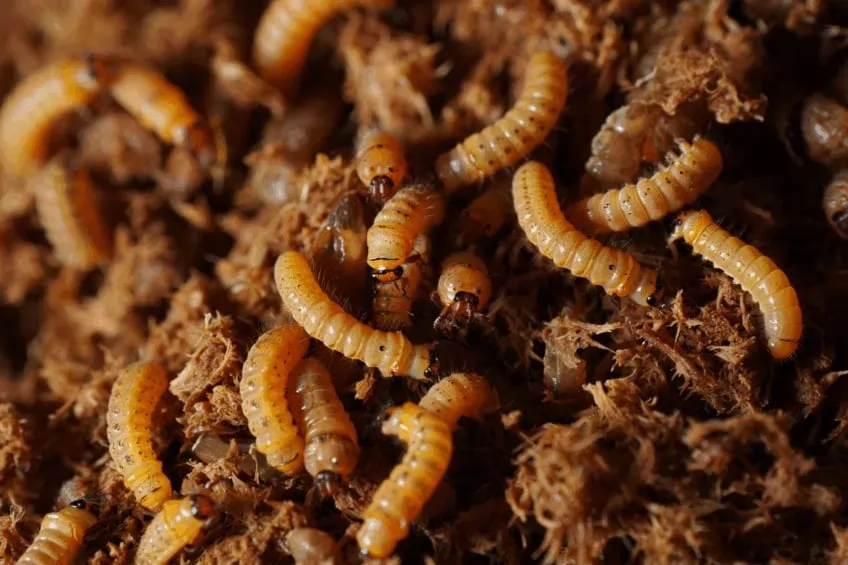
Image created with the help of AI (Reve.art).
(VAN) As global food demand surges, identifying secure methods to minimise agricultural waste grows essential. Scientists investigated black soldier fly larvae for processing pig and chicken manure.
The research examined microbial safety, potential transfer of resistance genes, and risks from heavy metals.
Black soldier fly, Hermetia illucens, can reduce livestock waste, but research into the safety and scalability of the system is required. Insect bioconversion concerns include potential bioaccumulation of pathogens, antimicrobial resistance genes and heavy metals in larvae and substrates.
How were insects studied?
Researchers from the University of Leeds, working with insect farming technology company Entocycle, carried out research in semi-commercial and lab-scale scenarios.
In the first environment, a semi-commercial-sized insect rearing facility was used to rear larvae on pig slurry, alongside a lab-based experiment using chicken manure.
Insect impact on waste properties
Larval microbiome composition was impacted by substrate, with increased Clostridia in larvae reared on slurry and manure. Pathogens largely decreased in the larvae from starting levels.
Both slurry and manure substrates showed time-related changes regardless of insect presence or absence except for E. coli in chicken manure, which was reduced in substrates with larvae added (−2.840 LFC vs −1.168 LFC; p<0.05), suggesting that time-associated alterations in the substrate could be more significant than larval presence.
Potential risks from using insects
Antimicrobial resistance gene changes were dependent on the substrate and gene, with increases found for tetM in chicken manure after larval bioconversion (9.000 vs 10.370 LFC; p<0.001), and for sul2 in larvae reared on chicken manure (3.509 vs −0.985 LFC; p=0.001).
In pig slurry-reared larvae, tetM decreased (−1.578 LFC; p<0.001), but there was no difference in sul2. Heavy metal contents generally met permissible standards for animal feed and organic fertilisers.
However, there was some non-significant evidence for bioaccumulation of cadmium in slurry-reared larvae 0.18 to 0.70 mg/kg) compared to starter larvae (0.25mg/kg) requiring further study.
HD / PW
Maybe you are interested
South Africa's poultry industry remains resilient
The South African Poultry Association (SAPA) says that it remains optimistic about 2025 amid ongoing challenges uncertainties, with highly pathogenic avian influenza remaining the most pressing concern.
Responding to intercontinental spread of HPAI avian influenza virus strain
The strategy for prevention and control of highly pathogenic avian influenza (HPAI) in the 2024-2033 period aims to respond to the intercontinental spread of circulating HPAI virus strains.
Shrimp industry is expected to earn more US$ 4 billion
Department of Fisheries (Ministry of Agriculture and Rural Development) in conjunction with Directorate of Fisheries, organized a forum on solutions to develop Vietnam's shrimp industry in a sustainable manner.