Lai Chau moves toward concentrated livestock farming and emission reduction
Update: Apr 25, 2026 - 21:43 (GMT+7)


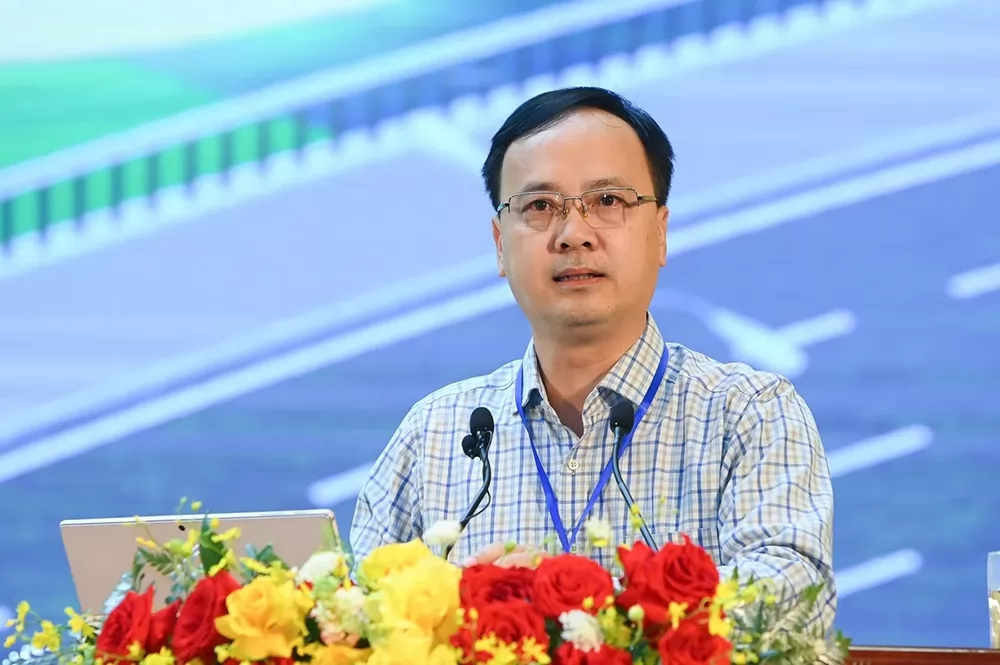
Phan Quang Minh, Deputy Director of the Department of Animal Health and Production. Photo: Tung Dinh.
(VAN) Lai Chau aims to shift toward concentrated, low-emission livestock farming by supporting smallholders to adopt professional, biosecure models.
On April 24, at the conference “Developing commodity agriculture and medicinal plants toward a green economy” in Lai Chau, Phan Quang Minh, Deputy Director of the Department of Animal Health and Production (Ministry of Agriculture and Environment), said the province still has significant room to develop livestock farming in a more concentrated, modern, and sustainable direction, but must address bottlenecks related to small-scale production, infrastructure, and environmental management.
Developing concentrated and specialty livestock farming
Presenting a report on “Solutions for concentrated, safe livestock farming to boost economic growth, control emissions, and treat livestock waste,” Deputy Director Minh said that Vietnam’s livestock sector ranks among the leading groups regionally and globally in several areas. The country currently ranks fifth in the world in pig population, leads Southeast Asia, and is among the top 10 globally in industrial animal feed production. Despite these achievements, the sector still faces persistent limitations.
In Lai Chau, small-scale household farming accounts for nearly 99% of total livestock establishments, making disease control, biosecurity, and environmental management difficult. Meanwhile, livestock waste nationwide amounts to tens of millions of tons annually, much of which remains untreated.
He assessed that livestock farming accounts for roughly 30% of Lai Chau’s agricultural structure, yet its position on the national livestock map remains below its potential. Current livestock density is only 0.2 livestock units per hectare, compared to the planned capacity of up to 1 unit per hectare.
Based on this, the department leader proposed that the province continue developing livestock farming toward concentrated, farm-scale production in line with Resolution 12. The focus should be on zoning specialized livestock areas to reduce pollution, limit disease risks, and ensure biosecure buffer zones.
Following the orientation mentioned at the conference, areas such as Muong Than, Than Uyen, Binh Lu, Pac Ta, Sin Suoi Ho, Hua Bum, Muong Kim, Nam Hang, and Le Loi will be planned for concentrated livestock development, along with synchronized investment in electricity, water, transport, and digital infrastructure.
Minh emphasized restructuring household livestock farming as one of the most important tasks. Smallholders need support to transition to more professional models through infrastructure investment, standardized biosecurity procedures, and improved knowledge of disease prevention.
Farmers should create a linkage with each other through cooperative groups, cooperatives, or value chains with large enterprises. The goal is to form closed production systems, from breeding and feed supply to farming and product consumption.
Alongside concentrated livestock development, Lai Chau is encouraged to expand specialty, high-value livestock models suited to local conditions, such as beekeeping, indigenous pig farming, and organic livestock production. The province aims to develop 115 concentrated pig farms with an output of 8,000 tons per year, along with nearly 7,000 bee colonies producing approximately 32 tons of honey annually. Local specialties such as Muong Te pigs and highland honey will be branded under the OCOP program.
Emission control must become mandatory
Regarding animal feed, Minh said that Lai Chau has strong potential to develop local raw material sources thanks to its massive land fund. The province can convert part of its less efficient agricultural land to grow maize, soybeans, and biomass feed crops, while utilizing agricultural by-products in a circular economy model to reduce input costs. Feed costs currently account for 70-80% of livestock production costs.
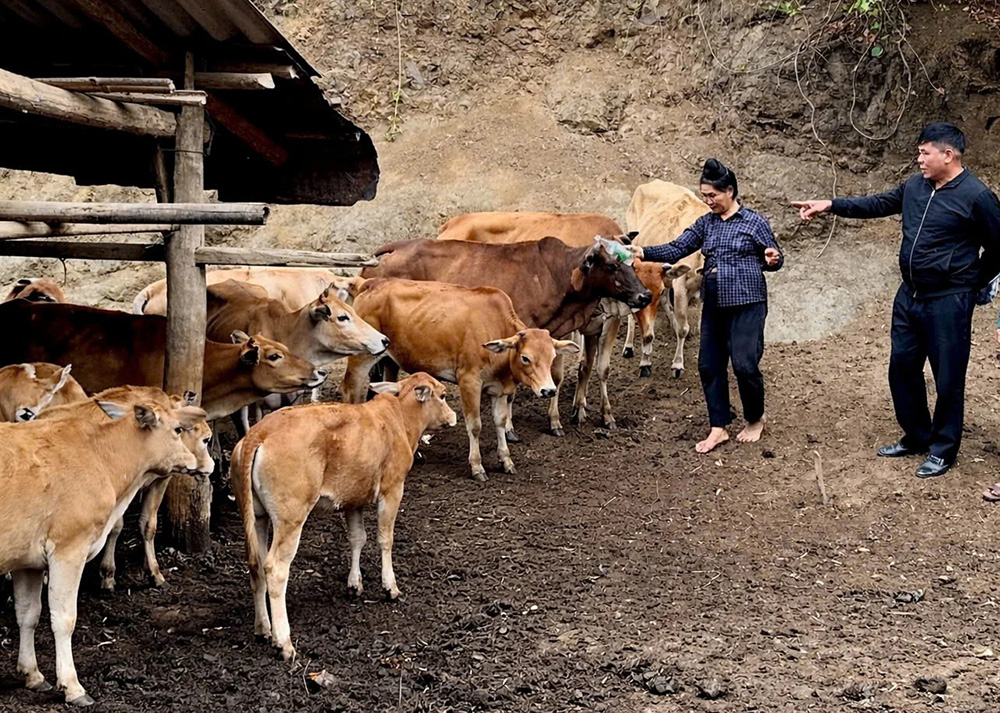
Residents in Cuoi To 2 village, Nam Cuoi commune, invest in large livestock farming. Photo: Lai Chau News.
Meanwhile, the province’s concentrated slaughtering system remains limited and has yet to meet the needs of large-scale livestock development. Therefore, Lai Chau needs to promote industrial slaughter facilities, apply traceability systems, and ensure veterinary hygiene and food safety standards.
Environmental management is another key issue. According to the Deputy Director of the Department of Animal Health and Production, as livestock farming becomes more concentrated, waste treatment and emission control must be mandatory. Technologies such as biogas systems, biological bedding, manure separation, microbial treatment, and organic fertilizer production should be widely adopted to reduce pollution and reuse waste for agricultural production.
Deputy Director Phan Quang Minh also highly regarded Lai Chau for adopting a livestock database system as early as 2017 and recommended continued investment in digital transformation in the livestock and veterinary sectors. Data update, disease management, traceability, and digital management of livestock facilities will form the foundation for a modern, smart, and sustainable sector.
The Department of Animal Health and Production affirmed its determination to continue working with relevant agencies, businesses, and Lai Chau province, thus supporting the development of concentrated livestock zones, modern production chains, biosecure practices, and emission reduction in the near future.
Author: Linh Linh
Translated by Samuel Pham
Maybe you are interested
High-tech shrimp farming brings high profits in Bạc Liêu Province
BẠC LIÊU — The Cửu Long (Mekong) Delta province of Bạc Liêu plans to expand super - intensive shrimp farming as it is sustainable and offers high production value.
3D turkey gut model created to fight blackhead disease
Hopes are growing that the creation of the first 3D turkey gut model could be a turning point in the battle against the virulent blackhead disease.

Early nutrition research in poultry is speeding up
Shifting market dynamics and the noise around new legislation has propelled Trouw Nutrition's research around early life nutrition in poultry. Today, it continues to be a key area of research.