Poland's poultry industry has had a record year
Update: Jan 11, 2025 - 13:35 (GMT+7)


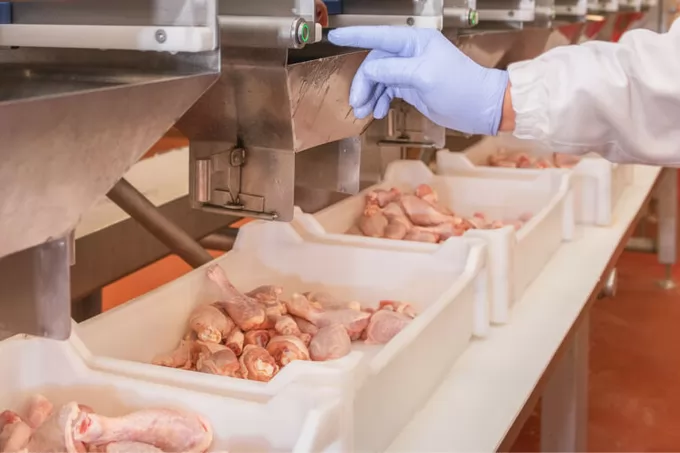
Poland is the largest producer of poultry meat in Europe, accounting for one-fifth of the EU's total output. Photo: Canva.
(VAN) Poland’s poultry industry experienced an outstanding year in 2024 as monthly production reached a record level, the National Chamber of Poultry and Feed Producers (KIPDiP) revealed.
The organisation said that monthly poultry production exceeded the threshold of 150 million heads during the year at least 3 times. “A few years ago, we wondered whether a monthly production record of over 100 million chickens could be maintained,” recalled Katarzyna Gawrońska, director of the National Chamber of Poultry and Feed Producers. “However, it quickly turned out that such a number of broilers produced on a monthly scale was not an exception but a rule for the industry. We can now celebrate achieving another milestone,” she added.
The industry’s growth this year has even triggered an occasional shortage of hatching eggs.
Poland is the largest producer of poultry meat in Europe, accounting for one-fifth of the EU’s total output. Spain and Germany, ranked second and third in the list of largest manufacturers, are far behind, with 13% and 14% in the EU’s poultry supply, respectively.
Mercosur is a threat
Despite the general positivity, Poland’s poultry farmers express concerns over growing dependence on foreign trade, Gawrońska said. Poland’s market can consume less than half of the broiler meat the country manufactures, meaning significant shifts in demand in other EU countries – the key sales market for Poland’s broiler meat – could be quite painful for the industry.
Against this background, Gawrońska rang the alarm bell over the looming agreement between the EU and the Mercosur countries. She noted a potential devastating impact of increased poultry meat imports from Brazil to the EU, warning that it could spell disaster for Polish poultry farms and breeders.
The proposed trade pact would allow free poultry imports from Mercosur, a bloc of Argentina, Brazil, Paraguay and Uruguay to the EU.
The looming agreement has sparked a wave of farmers’ protests in Europe over recent months, particularly in France. The protesters, mostly farmers, are concerned that the proposed trade pact, which would allow free poultry imports from Mercosur, could lead to unfair competition and a decline in the demand for locally produced poultry products.
Poland is one of the countries opposing the EU-Mercosur trade deal. Polish prime minister Donald Tusk has recently promised that his government “will not accept” the prospective free trade deal between the European Union and the Mercosur block in its current form, citing concerns of the farmers and growing food security risks.
H.D
Maybe you are interested
Animal feed prices rise sharply, farmers hit hard
HCM CITY - The price of livestock fodder has risen by 15-30 per cent in the last five months because of higher prices of inputs, and many farmers are facing big losses as a result.
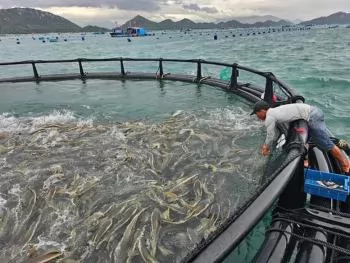
High-tech offshore aquaculture pilot launched in Khanh Hoa
The project's primary goal is to enhance the offshore aquaculture in Khanh Hoa province by improving productivity, adding value to the sector, and raising the income of local fish farmers and other stakeholders.


A place that supplies 10 million aquatic breeds every year
Hai Phong is a coastal city with many potentials and advantages in developing the fisheries economy, so aquatic breed production is of interest.