Việt Nam develops brackish-water shrimp breeds to boost exports
Update: May 16, 2026 - 13:29 (GMT+7)


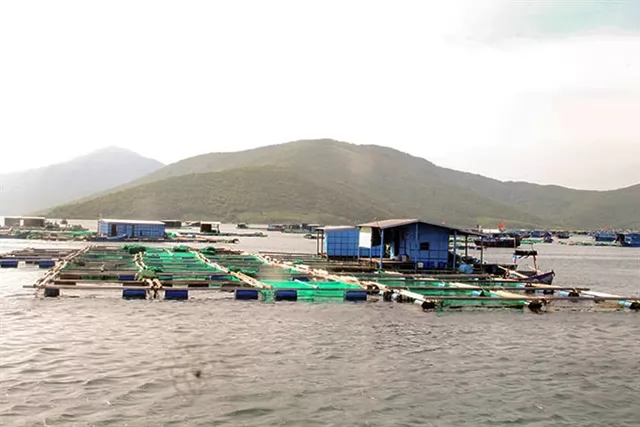
A lobster farm in Khánh Hòa Province. The locality is a big supplier of shrimp breeds. - Photo baokhanhhoa.vn
Vietnamese authorities are encouraging brackish-water shrimp producers to invest in high-tech to help enhance the country’s seafood production and exports.
KHÁNH HÒA — Vietnamese authorities are encouraging brackish-water shrimp producers to invest in high-tech to help enhance the country’s seafood production and exports.
The Ministry of Agriculture and Environment, in collaboration with the People’s Committee of Khánh Hoà Province, held a conference on the development of brackish-water shrimp breeds in Nha Trang on October 16.
At the conference, representatives from the Directorate of Fisheries and Fisheries Surveillance (Ministry of Agriculture and Environment) highlighted that the 21 coastal provinces and cities possess strong potential and advantages for aquaculture development.
In recent years, with strong support from relevant agencies, Việt Nam’s aquaculture sector, especially shrimp farming, has achieved impressive production results.
As of 2024, aquaculture output reached 5.68 million tonnes, marking a 24.5 per cent increase compared to 2020.
In particular, during the first nine months of 2025, more than 721,000 hectares were under cultivation. Brackish-water shrimp production was estimated at 932,000 tonnes, equivalent to 77 per cent of the annual target.
A representative from the Directorate of Fisheries and Fisheries Surveillance stated that facilities certified for shrimp breeding operations in Việt Nam are regularly inspected. The use of broodstock shrimp is now monitored more closely to ensure quality and traceability.
In addition, the management of aquafeed producers and environmental treatment facilities for aquaculture has been consistently maintained.
Trịnh Minh Hoàng, deputy chairman of the Khánh Hoà Provincial People’s Committee, stated that Khánh Hoà is considered the “National Shrimp Breeding Capital” - a major hub supplying shrimplings to most provinces from Quảng Ninh to Cà Mau.
However, shrimp farming in Việt Nam is facing numerous challenges. The European Commission has recently maintained its “yellow card” warning on Việt Nam’s wild-caught seafood, a measure imposed on countries involved in illegal, unreported and unregulated (IUU) fishing.
At the same time, many countries are imposing increasingly strict standards on imported seafood products.
At the beginning of 2025, US tariff measures on Việt Nam’s seafood products, particularly shrimp, created significant disadvantages for exporters in terms of competitiveness.
In addition, although policies for developing brackish-water shrimp breeds are in place, they remain incomplete and are not strong enough to attract greater investment in production.
The domestic supply of broodstock shrimp through research and selective breeding remains limited, with production still largely dependent on imports and wild-caught sources.
Although compliance with legal regulations in the production and distribution of brackish-water shrimp seed has improved, enforcement remains uneven, and shrimplings of unclear origin are still found on the market.
Despite being a major shrimpling production hub, Khánh Hoà’s aquaculture sector faced numerous challenges in 2025, particularly from unpredictable weather patterns, market fluctuations, and rising input material costs.
Speaking at the event, deputy minister Phùng Đức Tiến underlined that, even amid global and domestic economic difficulties, Việt Nam’s shrimp sector remains strategic and continues to underpin agricultural export performance.
By 2030, the Directorate of Fisheries and Fisheries Surveillance has set a target to expand brackish-water shrimp farming to 750,000 hectares, aiming for an annual output of over 1.3 million tonnes and export revenue of US$8.4 billion.
To achieve these goals, he urged coastal provinces to promptly develop and upgrade infrastructure for research and production, as well as allocate suitable land for effective broodstock shrimp cultivation.
To drive the growth of Việt Nam’s shrimp industry, the Ministry of Agriculture and Environment has put forward a national fisheries development plan to the Prime Minister, positioning shrimp as a priority sector to attract greater investment, he said.
He noted that to drive the growth of Việt Nam’s shrimp industry, the Ministry of Agriculture and Environment has put forward a national fisheries development plan to the Prime Minister, positioning shrimp as a priority sector to draw greater investment.
Tiến urged coastal provinces to update and refine fishery regulations. At the same time, communication activities should be strengthened to ensure that businesses fully comply with the provisions of the Fisheries Law.
The deputy minister called for stronger investment and technological innovation to enhance production efficiency, reduce costs, and improve shrimpling quality in a more sustainable way. — VNS
Maybe you are interested
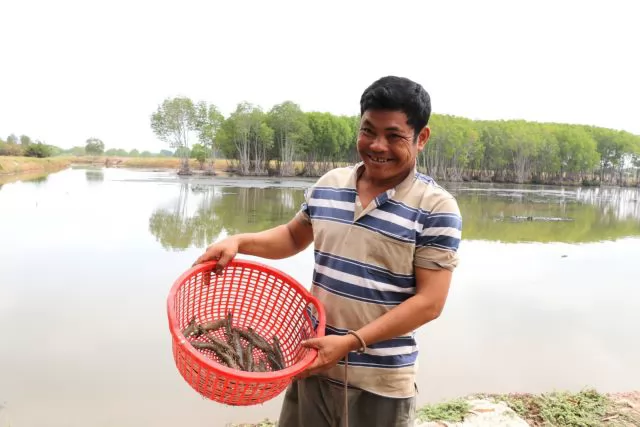
Trà Vinh farmers earn high profit from forest-aquaculture farming
Farmers in Trà Vinh Province have earned high profit from integrating the cultivation of mangrove forests and aquatic species this year.
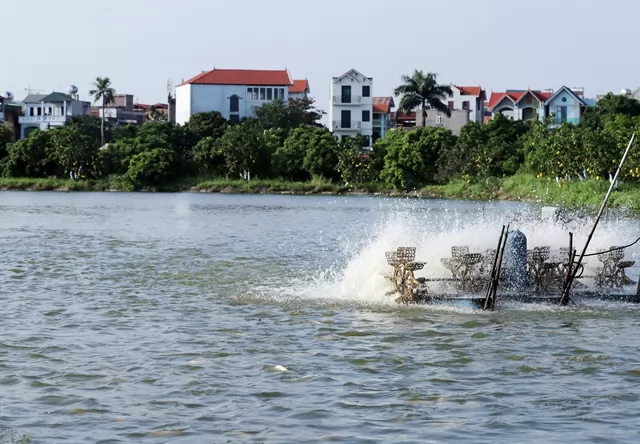
Hà Nội builds climate-resilient agriculture amid global challenges
In recent years, Hà Nội has sought to restructure its crop and livestock production as a strategic solution to build a modern, green, and sustainable agricultural sector, aligned with global trends in sustainable development and climate adaptation.
Hà Nội cow farming sees room for development
HÀ NỘI — Cow farming in Hà Nội has great opportunities for development, said the director of the city's Animal Husbandry and Veterinary Sub-Department Nguyễn Ngọc Sơn.