Bến Tre Province giant river prawn farms hit by saltwater intrusion
Update: Sep 04, 2021 - 13:52 (GMT+7)


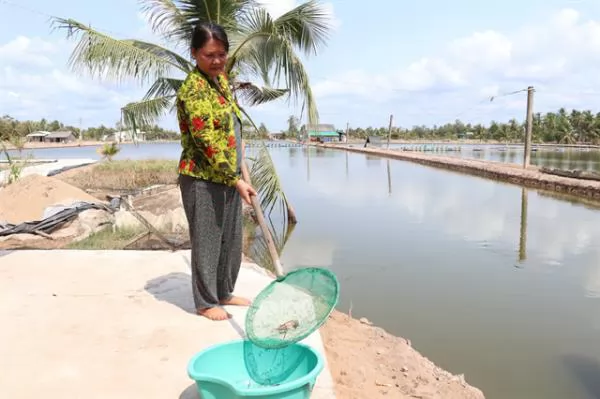
A farmer picks dead giant river prawns out of a breeding pond in Bến Tre Province. - VNA/VNS Photo Huỳnh Phúc Hậu
BẾN TRE – Many farmers raising giant river prawns in the Cửu Long (Mekong) Delta province of Bến Tre are facing losses due to saltwater intrusion, which is decimating the crustaceans.
Lê Thị Điệp, who rotates between rice and giant river prawns in a 1.6ha field in Thạnh Phú District’s Mỹ An Commune, had more than 130,000 prawns in this year’s crop. After four months they had grown to the size of a human thumb. But hot weather and the high salinity rate have been killing many for over more than half a month now.
More than 70 per cent are now dead, and they are continuing to die, and she is certain to suffer losses, she said.
Saltwater intrusion has caused the salinity rate to consistently reach 2 per cent this year and even 2.4 – 2.5 per cent on some days, a condition in which giant river prawns cannot survive, according to farmers.
Lê Thị Sương is breeding the creatures in her 4ha farm in Mỹ An, and has also seen thousands of prawns die every day from the salinity.
In the past the salinity rate would never exceed 1.7 per cent, and giant river prawns could withstand it, she said.
“This year the salinity rate has exceeded 2 per cent, and if the situation continues, all my prawns will die.”
Võ Văn Hiện, head of the Thạnh Phú Bureau of Agriculture and Rural Development, said provincial authorities are telling farmers how to mitigate the impacts of saltwater intrusion.
The delta is facing severe intrusion this dry season, and Bến Tre is one of its coastal provinces, which have been hardest hit.
Nearly a third of the province’s 3,000ha of giant river prawn farms has been affected by saltwater intrusion with a death rate of 30 per cent, according to the province Department of Agriculture and Rural Development.
The worst affected areas are in Thạnh Phú, Giồng Trôm and Mỏ Cày Nam districts.
The giant river prawn is farmed in 3.2 per cent of the province’s total aquaculture area, but it is one of the province’s key fisheries products because of its high value and Bến Tre’s potential for breeding it, according to the department.
Local farmers breed giant river prawns in ponds and irrigation ditches in orchards and also rotate it with rice in paddies.
The breeding of giant river prawns in ditches in orchards, especially coconut groves, has become common in the province in recent years since it offers a steady income.
The province is the country’s largest coconut producer and has around 72,000ha of trees.
Of the figure, irrigation ditches make up 10,800ha, or 15 per cent, according to the province’s Agriculture Extension Centre. – VNS
Maybe you are interested
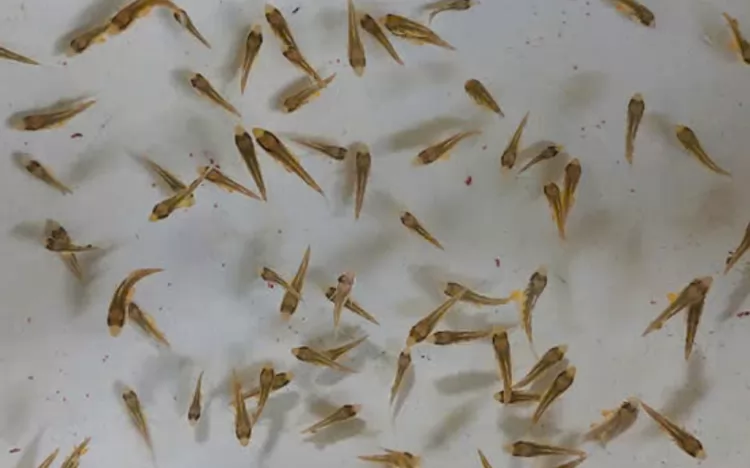

Vietnam becomes first nation to successfully breed high-value amberjack
Vietnam has become the first country in the world to successfully breed the prized amberjack, a breakthrough achievement with significant implications for the nation's aquaculture industry and the global seafood market.
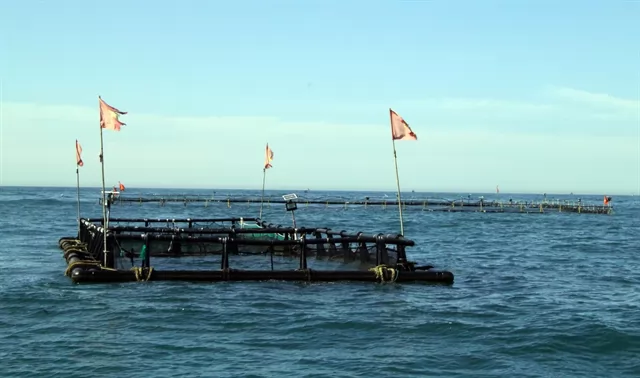
Ninh Thuận farmers expand aquaculture
The province has great potential for developing marine aquaculture as it has a coastline of more than 100km, and clean sea water with high and consistent salinity.


Developing profitable chicken production systems for Southeast Asian farmers
A regional initiative is helping smallholder farmers in Southeast Asia raise chickens that are more productive, resilient and better suited to local farming systems and markets.