Dutch government moves towards mandatory avian influenza vaccination
Update: Jun 06, 2026 - 14:07 (GMT+7)


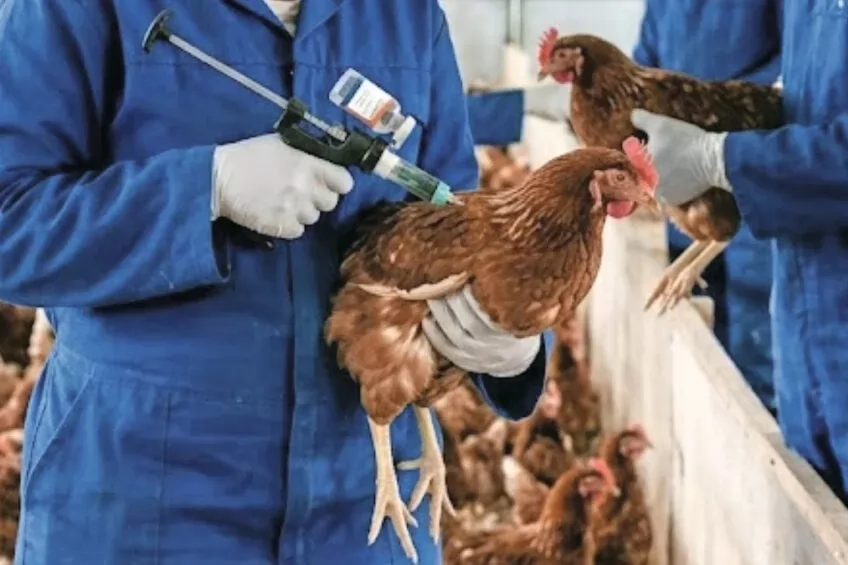
The government is working together with the poultry sector on a plan to make vaccination against avian influenza mandatory for laying hen farms. Image created with the help of AI.
(VAN) The Dutch government is working on a plan to make avian influenza vaccination compulsory for all laying hen farms in the country. Trade barriers remain a major concern.
The government is working together with the poultry sector on a plan to make vaccination against avian influenza mandatory for laying hen farms. This year, 45 poultry farms have been infected with bird flu. As a result, almost 2.3 million animals have been culled to prevent the spread of the virus.
“Avian influenza can be highly disruptive for animals, businesses and society,” said the responsible State Secretary for Agriculture, Silvio Erkens. “Together with the poultry sector, we are therefore taking a new step towards tackling the virus more effectively. By focusing on measures such as vaccination, we can begin to reduce avian influenza in a structural way. In doing so, we are pursuing an internationally accepted approach so that it does not come at the expense of our trade.”
No trade barriers
Work on vaccination against the virus has been ongoing for some time. A field trial has shown that vaccinated animals significantly reduce the risk of a large-scale avian influenza outbreak. Infections can also still be detected quickly through the mandatory European monitoring programme. In addition, the first vaccination pilot is progressing well.
“The table eggs from vaccinated hens have been sold on the Dutch market and, so far, no trade barriers have arisen,” according to the Ministry of Agriculture. In a letter to Parliament, Erkens wrote that trading partners are highly appreciative of the transparent way in which the Netherlands has organised and communicated the entire pilot programme. “The poultry sector has made a constructive contribution to this,” Erkens stated. The pilot will continue until the end of December this year.
Trade barriers remain a major concern regarding the use of vaccination. For that reason, vaccination is being introduced step by step. International cooperation is underway to secure acceptance of products from vaccinated poultry. The Netherlands has taken the initiative to establish an international working group with the US, Canada, France, the UK, the European Commission and the World Organisation for Animal Health.
Plan for mandatory vaccination
Erkens will spend the coming months working with the poultry sector on an action plan for mandatory vaccination of laying hens against avian influenza. The action plan is expected to be completed by the end of this year. However, the poultry sector has set a number of conditions for introducing a vaccination programme. These are focused on the international acceptance of products from vaccinated poultry.
In addition, the poultry sector is calling for a feasible and affordable surveillance programme. “The export value of products such as table eggs amounts to around €700 million. It is therefore of great importance that trade in poultry and poultry products is not harmed. A careful approach and a proper assessment of the impact on the sector are essential,” Erkens wrote in his letter to Parliament.
Flu jab for poultry farmers
Although the risk of avian influenza transmission to humans is still considered very low, the government is nevertheless taking precautionary measures. People considered most at risk of infection – including poultry farmers, veterinarians and animal ambulance staff – will be offered the opportunity to receive the seasonal influenza vaccination, commonly known as the flu jab, from the next flu season onwards.
This vaccination is not directly intended to reduce the likelihood of people becoming infected with avian influenza. The primary aim is to prevent any bird flu viruses they may encounter from mixing with human influenza strains. Pig farmers who may come into contact with swine flu viruses will also be offered the flu jab in order to prevent animal influenza viruses from combining with human strains. According to public health experts, vaccinating people specifically against bird flu currently offers little added value.
Fewer farms in high-risk areas
The intensified action plan for tackling avian influenza and reducing the risks of zoonotic diseases also examined structural measures to reduce the number of poultry farms in poultry-dense and water-rich areas. An impact assessment is currently underway into the consequences for public and animal health, as well as for the poultry sector. The results are expected before the summer.
“These are far-reaching measures that require a solid evidence base and new legal powers. The guiding principle is that the measures must be appropriate, necessary and proportionate,” Erkens said.
HD / PW
Maybe you are interested
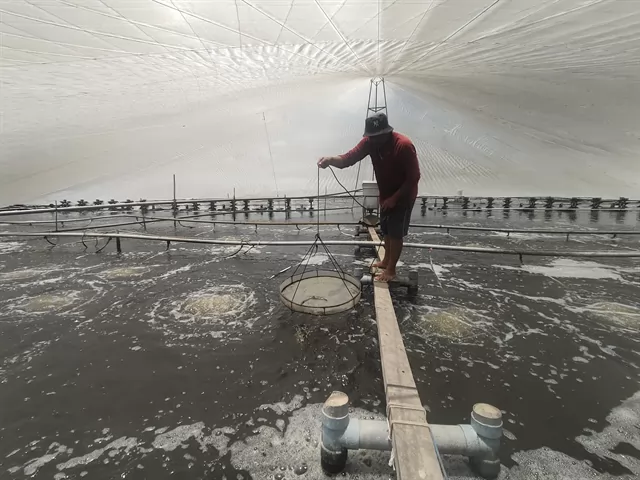
Bến Tre Province farmers adopt innovative techniques for high-tech shrimp farming
Farmers in Bến Tre Province are increasingly switching to high-tech shrimp breeding, adopting more innovative techniques to boost productivity, reduce costs and increase incomes.
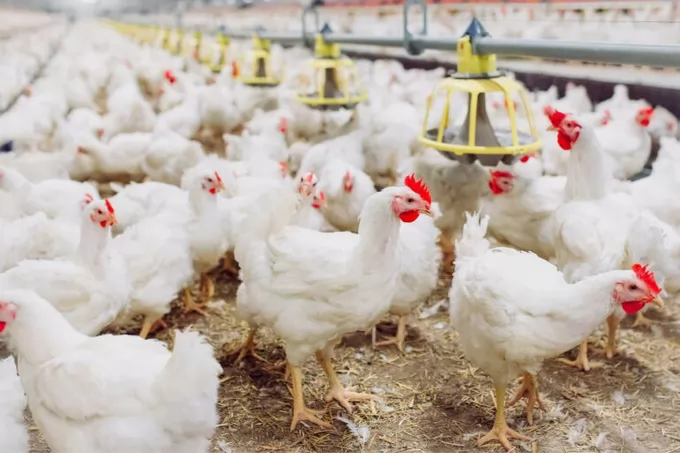
Black soldier fly larvae research boost for UK poultry sector
Funding totalling £3 million has been granted to a UK consortium which will utilise advanced technologies and black soldier fly larvae to improve poultry welfare and promote sustainability in the industry.
Bà Rịa - Vũng Tàu farmers expand breeding of Pacific oysters
BÀ RỊA-VŨNG TÀU — More farmers in the southern province of Bà Rịa-Vũng Tàu are earning more income by breeding Pacific oysters in an environmentally friendly and sustainable way.