Giant legs of Vietnam's 'dragon chicken' a Lunar New Year delicacy
Update: Sep 02, 2023 - 13:24 (GMT+7)


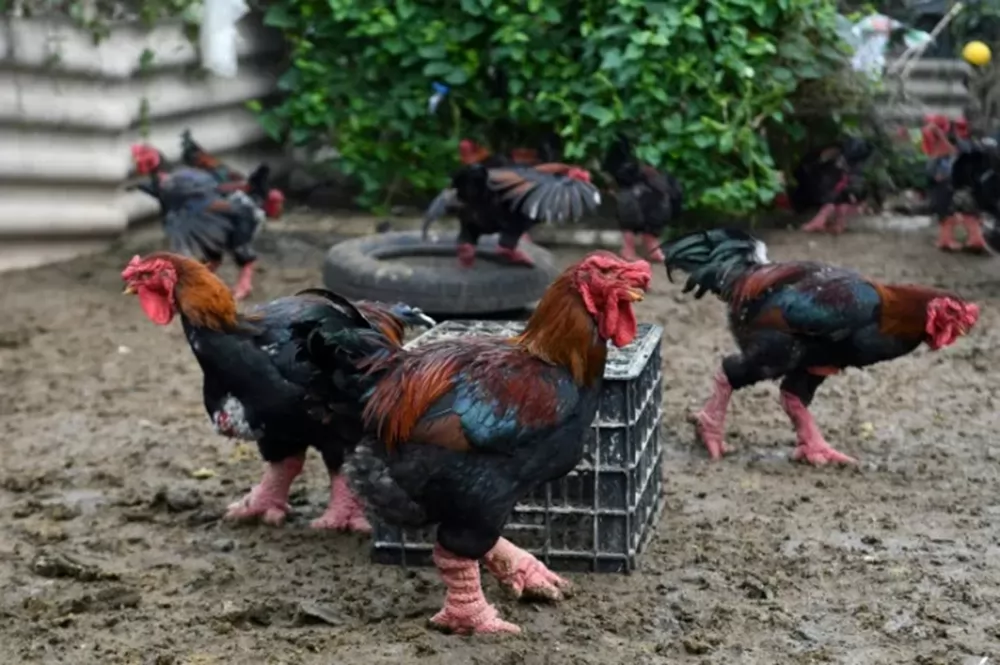
he lumpy legs of the Dong Tao chicken -- named after the commune where it is bred in northern Vietnam -- are considered a delicacy, and are particularly popular among the wealthy during the Vietnamese Lunar New Year, known as Tet. Photo: AFP
On a farm close to Hanoi, Le Van Hien picks out the best bird among his flock of "dragon chickens" -- a breed with legs as thick as a brick that can fetch up to $2,000 a head.
The lumpy legs of the Dong Tao chicken -- named after the commune where it is bred in northern Vietnam -- are considered a delicacy, and are particularly popular among the wealthy during the Vietnamese Lunar New Year, known as Tet.
Hien's prized four-kilogramme bird, whose enormous legs make up around a fifth of its body weight, was sold for about $150 -- but especially large pedigree chickens have been valued at more than 10 times that. Some are even entered into beauty contests.
The key to the bird's taste is its diet of corn and rice and the freedom it has to roam, Hien told AFP.
Although the laying hens are kept in battery cages, which have been banned in some countries across the world, the chickens bred for meat are let loose in a small garden.
"The more the chicken walks, the stronger and bigger their muscles are," said Hien, who has been breeding chickens for more than 15 years.
The meat of the Dong Tao chicken -- which can reach up to 10 kg -- is prized for its tough and chewy texture and is also low in fat.
It is sometimes served boiled, but also fried, stewed or served with lemongrass.
Le Van Luan, who picked Hien's chicken meat as a year-end gift for his business partners and elderly relatives, is a regular customer in Dong Tao.
"The best part of the Dong Tao chicken is the skin of their legs. The bigger the legs are, the tastier," he said.
AFP
Maybe you are interested
US poultry industry projections, state ban on cultivated chicken, new funding, lice findings
The US Department of Agriculture (USDA) has released long-term projections for the nation's poultry industry, showing a very strong road ahead.

It is time to reduce emission in livestock farming
Producing livestock generates three main greenhouse gases - methane (CH₄), nitrous oxide (N₂O), and carbon dioxide (CO₂), of which methane is particularly significant because it has a heat-trapping potential 25 times stronger than carbon dioxide.
Are socially distanced chickens laying more affordable eggs?
Shoppers used to picking up the cheapest eggs at the grocery store may now be reaching for higher-end cartons.