Patterns of feed intake linked to broiler growth performance
Update: Jul 27, 2024 - 16:38 (GMT+7)


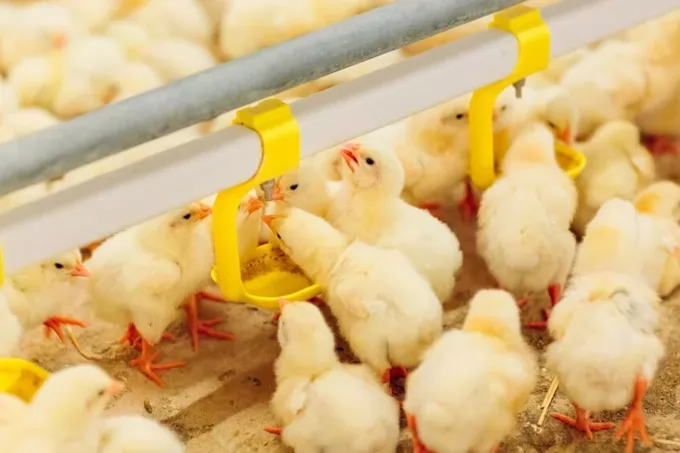
A recent study has has characterised the dynamic patterns of feed intake and their association with growth performance. Photo: Canva
(VAN) Improving feed utilisation is important. Scientist therefore measured individual weekly feed intake and body weight of broilers to characterise the dynamic feed intake patterns and investigate their relationship with growth performance.
Over the past few decades, significant improvements in the feed intake and feed utilisation efficiency of broilers have been achieved through advanced breeding procedures, although dynamic changes in feed intake and their effects on the feed conversation rate have remained unclear.
Chinese scientist from the State Key Laboratory of Animal Biotech Breeding and Frontier Science Centre for Molecular Design at China Agricultural University in Beijing, carried out a study measuring individual weekly feed intake and body weight of 274 male broilers to characterise the dynamic feed intake patterns and investigate their relationship with growth performance.
The groups were Cornish (CC group, N=91), White Plymouth Rock (RR group, N=88), and their hybrid (CR group, N=95). The broilers were from 2 purebred lines and their crossbreed and measurements were collected from 4-6 weeks of age. Throughout the experiment, the birds were provided with ad libitum access to feed and water. Broiler weight was measured at 21, 28, 35 and 42 days.
Overall, a continuous increase in the weekly feed intake occurred from 4-6 weeks, while the body weight gain reached an inflection point in week 5. The dynamic change in weekly feed intake was found to follow 3 distinct patterns:
A continuous weekly increase in FI
An increase followed by a plateau
An increase followed by a decrease
The prevalence of these patterns was similar in the purebred and crossbred populations with pattern 2 being the most frequent followed by a modern proportion of pattern 1 and then the lowest proportion of pattern 3.
Broilers following patterns 1 displayed significantly better growth performance and feed utilisation efficiency than those following pattern 3, emphasising the importance of maintaining good appetite in the last stage of broiler production.
In summary, the study has characterised the dynamic patterns of feed intake and their association with growth performance with the scientists saying their results offered a new foundation for improving utilisation efficiency and investigating feeding regulation in broilers.
HD
(PW)
Maybe you are interested
Animal welfare: Emerging concept and application that needs to be promoted in Việt Nam
Some key aspects of animal welfare include that animals can have freely access to sufficient and good-quality water and feed, he said, adding that animal welfare also refers to freedom of stress and fear and natural behaviours...
HCM City dairy farmers encouraged to breed oxen
Viet Nam News / HCM CITY — The HCM City Department of Agriculture and Rural Development has advised dairy farmers having cows with low milk yields to switch to higher-yield cows or oxen for their meat.
Hà Nội's farm economy yields high economic value
In recent years, Hà Nội's agriculture sector has created favourable conditions for organisations and individuals to develop the farm economy.