Russian poultry industry slides as profits collapse, Chinese imports surge
Update: May 09, 2026 - 13:32 (GMT+7)


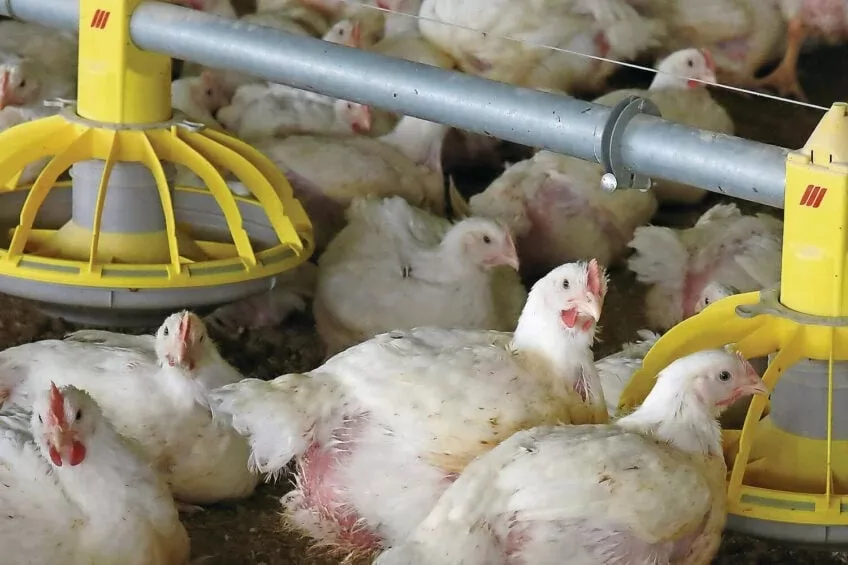
In the first few months of 2026, Russia's leading poultry-producing regions recorded sharp declines in broiler meat production. Photo: Hans Prinsen.
(VAN) After stagnating in 2025, Russia’s poultry industry posted a 2.6% drop in output in the first quarter of 2026, amid collapsing profitability and weak domestic prices.
Russia’s leading poultry-producing regions recorded sharp declines in broiler meat production at the start of the year, according to data from the state statistics agency Rosstat. For example, output in the Leningrad region fell 9.8%, while Stavropol region posted a 10.5% decline and Tambov region a 12.4% drop.
Poultry production in Russia is no longer generating profit, Sergey Yushin, chairman of the National Meat Association, told local news outlet Ura. “Many poultry farmers ended the first quarter with zero profitability, while rising costs for electricity, logistics, and so on have not gone away,” Yushin said.
In 2025, the Russian poultry industry saw a 50% drop in net profit to Rub 15.7 billion (US$210 million). The price dynamics in the first months of 2026 suggest that this year’s financial performance could be notably worse.
“The current situation is unfavorable for the development of poultry farming [in Russia]. If prices aren’t adjusted, investment in the industry will be hampered,” noted Yushin.
China is advancing
One of the factors that puts pressure on prices and profitability is soaring imports from China, according to analysts. Originally imported to Russia to be used primarily in the meat-processing industry, cheap poultry breasts are now increasingly conquering grocery shelves across the country. “Chinese chicken is already sold in Moscow and St. Petersburg,” Yushin said.
According to analysts, China’s poultry exports to Russia are limited by quota. Once a certain level is reached, imports are subject to an additional import duty. However, as Russian farmers note, the Chinese chicken fillet is so cheap that the protective mechanism doesn’t work: it remains highly attractive on price.
Strong ruble
A rise in imports is also accompanied by difficulties in exporting poultry. Both factors are fueled by the strong Russian ruble’s exchange rate. Although poultry exports grew in 2025, this growth was insufficient to support the Russian industry, Dmitry Krasnov, managing director of Reksoft Consulting, has stated.
The outlook for poultry exports in 2026 is rather pessimistic, partly due to “negative epizootic situation” in the poultry industry in some parts of the country, according to Krasnov. However, the Russian poultry industry sees an opportunity to capitalise on the market turbulence in the Middle East to their own benefit.
“Persian Gulf markets are offering extremely favourable prices due to the crisis, which companies could take advantage of to support their export revenue,” Krasnov said.
HD / (PW)
Maybe you are interested


Ninh Thuan province finds goat farming lucrative to expand
Ninh Thuan, the largest goat breeding locality in Vietnam, is expanding its herds as they offer farmers high incomes and it has natural advantages in raising the animals.
England: Details of health and welfare grants for laying hens housing revealed
Information about the new post-Brexit health and welfare grant support for egg farmers in England has been released by the government's Rural Payments Agency.
Poland's position as European poultry powerhouse strengthened
(VAN) In October 2023, the Polish poultry industry is believed to have produced the highest monthly output of hatched broiler chicks ever.