Scientists develop technology for converting feathers into feed-grade meal
Update: Dec 28, 2025 - 13:06 (GMT+7)


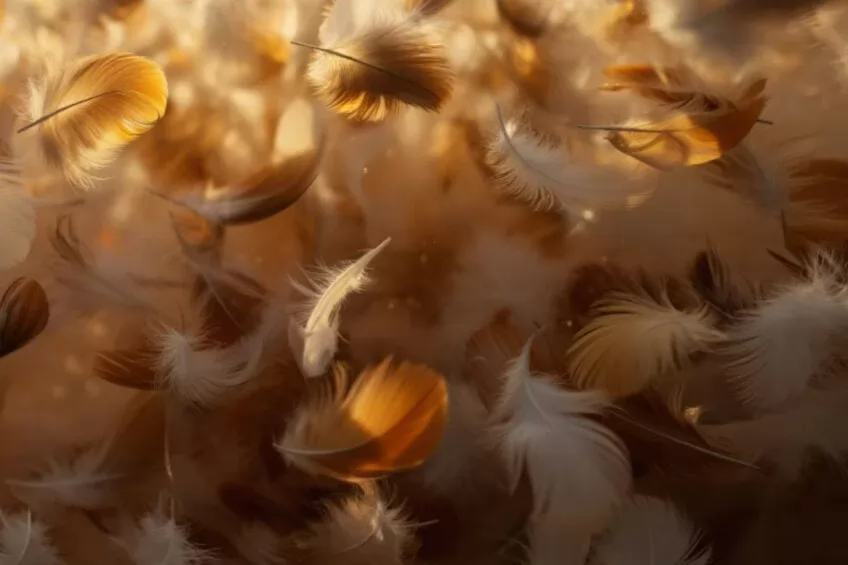
Scientists from Iran have developed a technology that would add value to feathers that would otherwise be waste. This image was created with the help of AI Reve.art.
(VAN) A group of Iranian scientists from the National Institute of Genetic Engineering and Biotechnology claimed that they have developed a technology that allows effective processing of poultry feathers into meal using a Bacillus strain.
Feathers, which account for around 5% of the total weight of poultry, represent one of the most significant waste streams in the poultry industry, Amir Maimandipour, one of the scientists behind the project, said.
Iran’s poultry industry is growing
“Poultry industry expansion [in Iran] means that more volume of this waste is generated, which requires its management and conversion into products with higher added value,” Maimandipour said.
Despite ongoing challenges with feed supply, the Iranian poultry industry experienced a significant rebound in 2024 following several years of turbulence. Monthly production reached 223,000 tonnes, allowing Iran to return to net exporter status, primarily to Iraq.
Currently, poultry feathers are occasionally used as a low-nutritional-value source of feed protein in the livestock industry, although they are commonly treated as slaughterhouse waste. New technology promises to substantially improve the existing feeding practices.
A new approach for feathers
The key obstacle to using feathers in animal feed is that a significant share of the feather protein is keratin, a fibrous structural protein that also forms the protective outer layer of skin, hair, nails, feathers, horns, and claws in animals.
There are numerous disulfide bonds in the keratin structure, which makes this protein insoluble and difficult to digest, Maimandipour said.
Despite this, keratin has the potential to be used beyond animal feeding. Keratinases have previously been isolated from microorganisms such as fungi, a number of bacteria, and Streptomyces. These enzymes have found many applications not only in wastewater systems but also in recent years in industries such as food, clothing, medicine, and cosmetics, Maimandipour said.
The researchers isolated the gene encoding keratinase from a native bacterial strain and expressed it in a laboratory host to study its enzymatic properties. According to Maimandipour, the strains can be applied directly for enzyme production or used alongside feather waste collected from slaughterhouses to facilitate the conversion process.
Scientists anticipate that the feather meal could enhance animal diets, but further research is essential to confirm its effectivenes.
HD / PoultryWorld
Maybe you are interested
High-tech shrimp farming brings high profits in Bạc Liêu Province
BẠC LIÊU — The Cửu Long (Mekong) Delta province of Bạc Liêu plans to expand super - intensive shrimp farming as it is sustainable and offers high production value.
Creativity helps fish farmer gain success, help his peers
HCM CITY — Thanks to advanced science and technology, Tống Hữu Châu, an owner of a fish farm in HCM City's District 12, has built a brand for his ornamental fish and his products have been exported to the US and EU.
Breeding insects for export, a new industry for VN
VietNamNet Bridge - The most difficult procedures in insect export is asking for the certificate of quality, size and the certificate of origin for insects.