Shrimp-rice specialty from salt-freshwater ecological area
Update: May 16, 2026 - 13:34 (GMT+7)


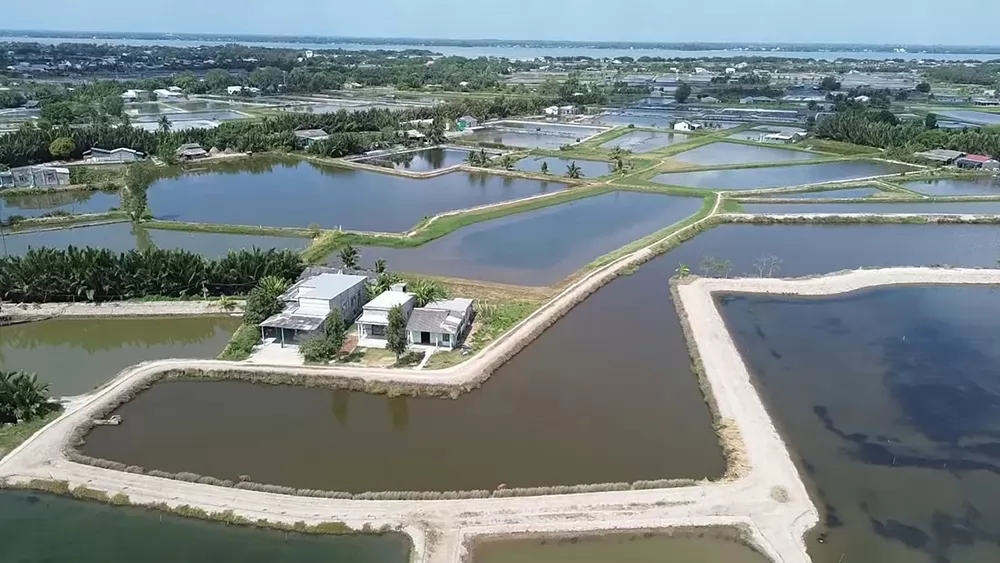
The shrimp-rice plots stretching across Hoa Minh island commune form a distinctive agricultural production zone adapted to climate change. Photo: Ho Thao.
(VAN) With six months of saltwater and six months of freshwater, residents in the Hoa Minh island commune have developed an ecological shrimp–rice model, producing clean agricultural products and opening a sustainable pathway for agriculture.
Situated in the middle of the Co Chien River, Hoa Minh island commune in Vinh Long province features a distinctive ecology, with six months of saltwater and six months of freshwater. To both adapt and secure livelihoods, local residents have selected nature-based production methods.
After the Lunar New Year, when saltwater intrudes deep into the fields, farmers stock black tiger shrimp, crabs, and other brackish-water species. In July or August on the lunar calendar, when early seasonal rains bring back freshwater, rice is sown on the fields.
Under this model, almost all stages operate within a biological cycle. After the shrimp crop, a layer of soft mud, alluvium, and decomposed organic matter becomes a natural nutrient source for rice plants. As a result, during the rice season, farmers use very little chemical fertilizer or pesticides while fields remain lush and productive. Conversely, after harvest, rice stubble is left to decompose in fields, serving as feed for shrimp and crabs in the following saltwater season.
Having practiced the shrimp-rice model since 1997, Mr. Nguyen Van Suong in Dai Thon hamlet recalled that in the early days, when technical officers and lecturers from Can Tho University came to provide guidance, many farmers were unfamiliar with the new approach. Officers and party members implemented it first; only after seeing its effectiveness did other farmers follow.
For more than 20 years, his family has largely avoided intensive, chemical-dependent production. In the rice crop, about ten days after sowing, he releases ducklings into the fields. The ducks feed on weeds and brown planthoppers while also controlling golden apple snails, keeping the fields nearly pest-free without the need for pesticides.
"We grow rice for our own consumption and for sale to acquaintances, so we do not dare to use chemicals. Letting ducks handle it naturally keeps both the fields and the soil healthy," Mr. Suong said.
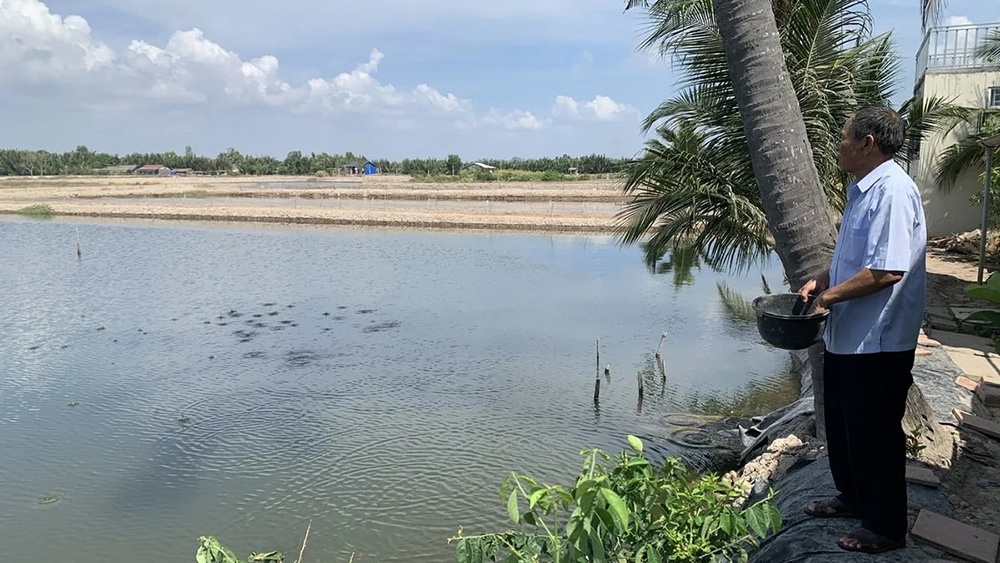
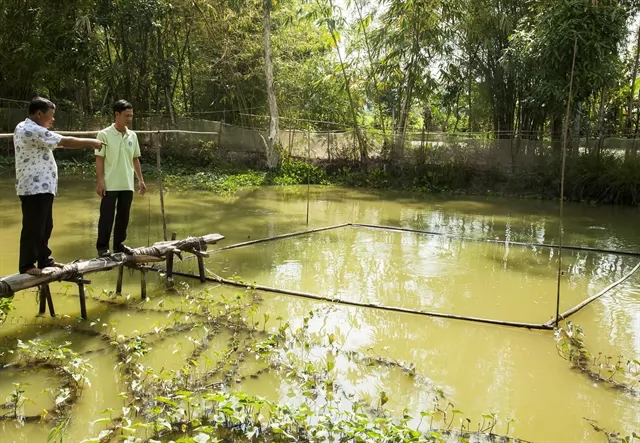
Farming model within the shrimp-rice production area in Hoa Minh. Photo: Ho Thao.
According to Mr. Suong, switching from dense sowing to sparse row sowing has nearly halved seed use. Rice plants receive sufficient sunlight, resulting in stronger stems, reduced lodging, fewer pests, and better grain filling. Fertilizer use has also declined significantly because the field accumulates substantial organic matter after a shrimp season. After harvesting, he does not burn the fields but leaves the stubble to decompose naturally. At the start of the saltwater season, he renovates canals, brings in water, and stocks black tiger shrimp and crab breeds at very low density.
On an area of about 7,000 m², he stocks only 10,000-15,000 shrimp, far lower than in industrial farming. Low-density farming allows shrimp to stay healthy, reduces competition for feed, limits disease, and results in slower but firmer growth.
"In the first two months, I do not use industrial feed because the fields already provide natural food from decomposing stubble, algae, plankton, and benthic organisms. When shrimp and crabs grow larger, I supplement with homemade feed from milled rice, bran, and ground dried shrimp. Thanks to this slow, clean farming process, black tiger shrimp reach large sizes of 14-20 heads/kg after 4-5 months, with firm flesh and a rich, sweet taste. In some years, prices exceed VND 300,000/kg. Combined with commercial crabs and clean rice, total income reaches nearly VND 100 million/year. More importantly, the soil is not degraded, and the water is not polluted," Mr. Suong noted.
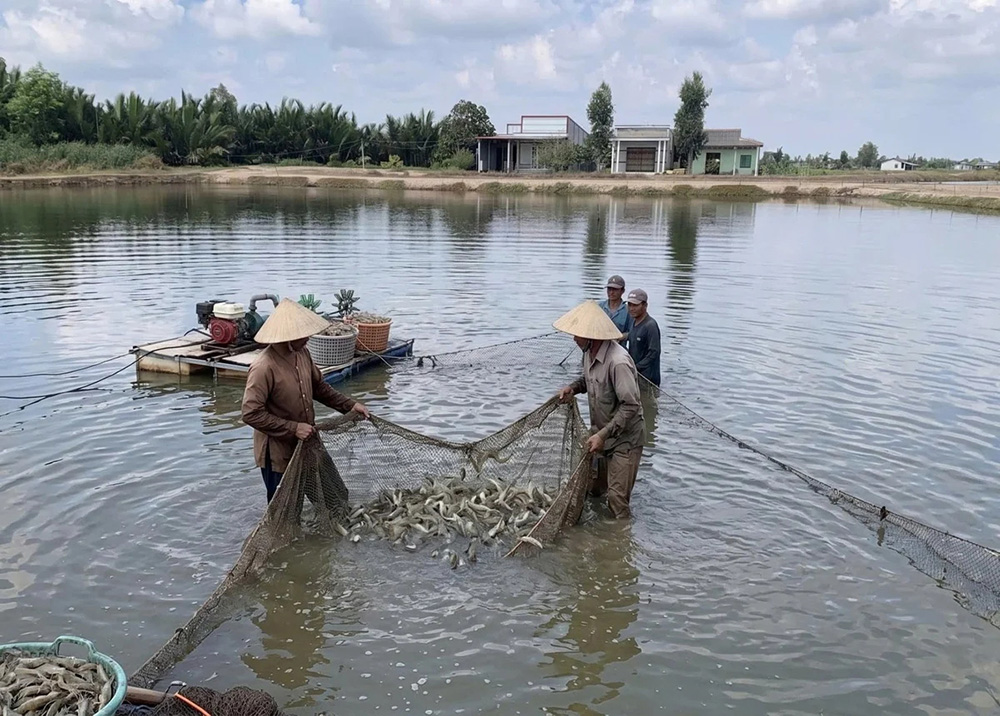
Hoa Minh residents harvest black tiger shrimp under the clean shrimp–rice model. Photo: Ho Thao.
According to Mr. Nguyen Thanh Can, Vice Chairman of the Hoa Minh Commune People’s Committee, the shrimp-rice model is currently the most effective production direction adapted to local natural conditions. As of now, the commune has formed a linkage area of about 20 hectares of organic rice combined with shrimp farming certified under European organic standards. This production zone is part of the Long Hoa - Hoa Minh value chain and is being contract-farmed by enterprises at purchase prices 1.5-1.7 times higher than conventional rice. The ecological shrimp produced here are also highly valued due to low stocking density, limited industrial feed, and minimal use of antibiotics, resulting in firm flesh and naturally sweet flavor.
On average, each hectare of shrimp-rice farming generates about VND 100 million in revenue from rice, shrimp, crabs, and other aquatic products. While profits may not spike like industrial intensive farming, the model offers long-term stability, fewer risks, lower costs, and notably, preservation of the soil-water ecosystem.
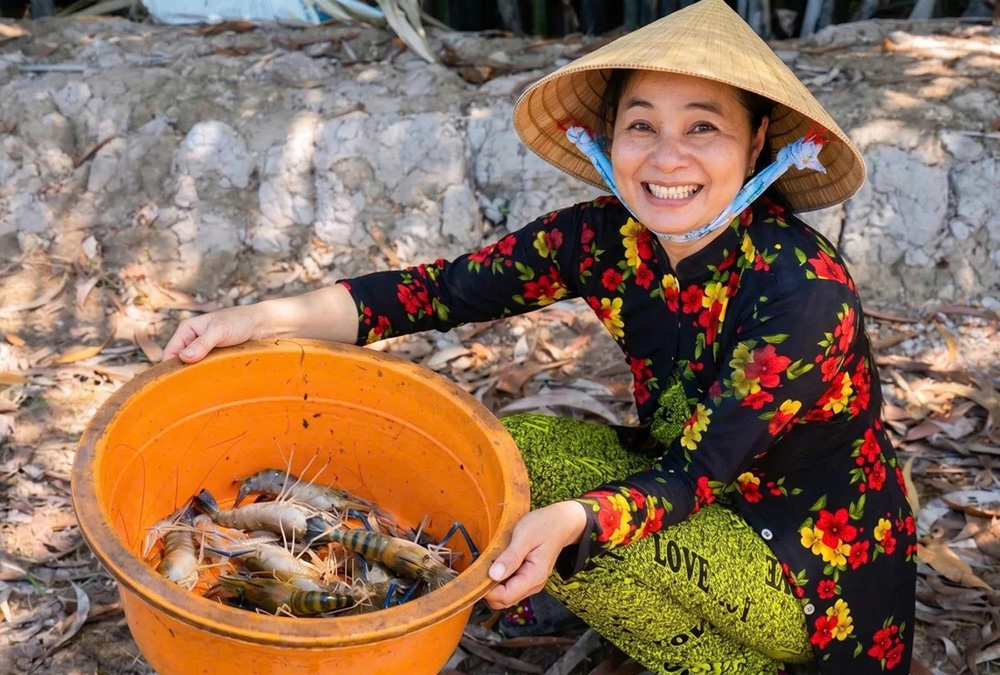
Harvesting farmed shrimp in the shrimp–rice production area in Hoa Minh. Photo: Ho Thao.
"The green consumption trend is rising rapidly. Products created through environmentally friendly processes, with minimal chemical use and a clear ecological story, will have a strong competitive advantage. The Hoa Minh shrimp-rice model is on the right track," Mr. Can stressed.
According to the leader of Hoa Minh commune, the locality is promoting the development of a certification mark for Long Hoa–Hoa Minh shrimp-rice products while expanding clean shrimp farming and organic rice areas and calling on enterprises to invest in value chain linkages and community-based ecotourism. Once this value chain is fully established, the alluvial island in the Co Chien River will not only be a hub of green agricultural production but also an attractive experiential destination, where tourists can harvest rice, cast nets to catch shrimp, and enjoy meals made from freshly harvested rice and just-caught seafood.
Author: Ho Thao
Translated by Thu Huyen
Maybe you are interested
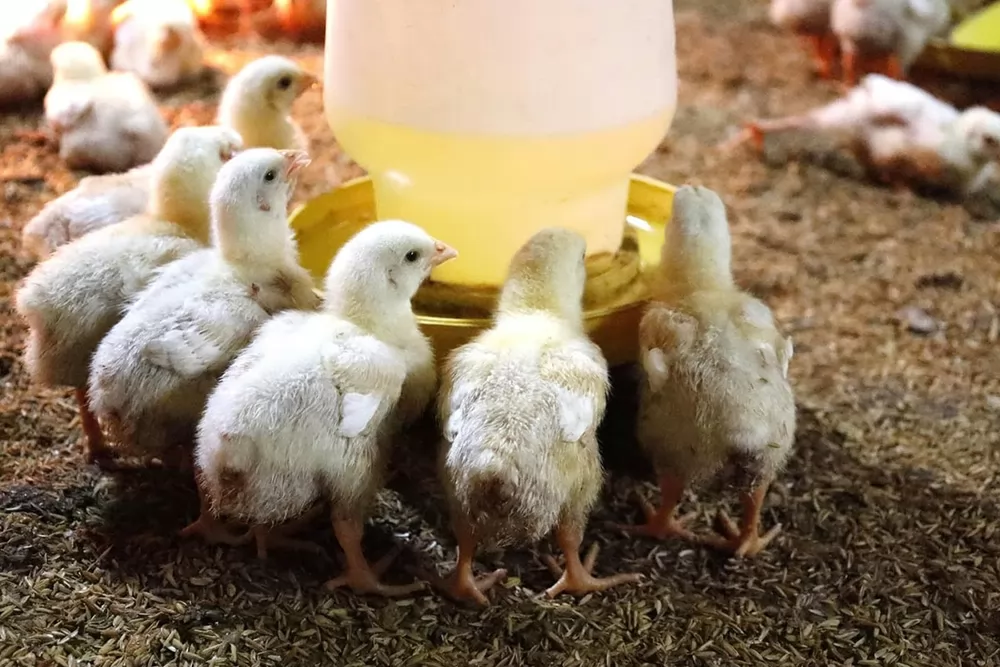
Biosecure livestock farming fosters a green economy
Kim Anh commune (Hanoi) is shifting to biosecure livestock farming to improve product quality and increase sustainable economic value.
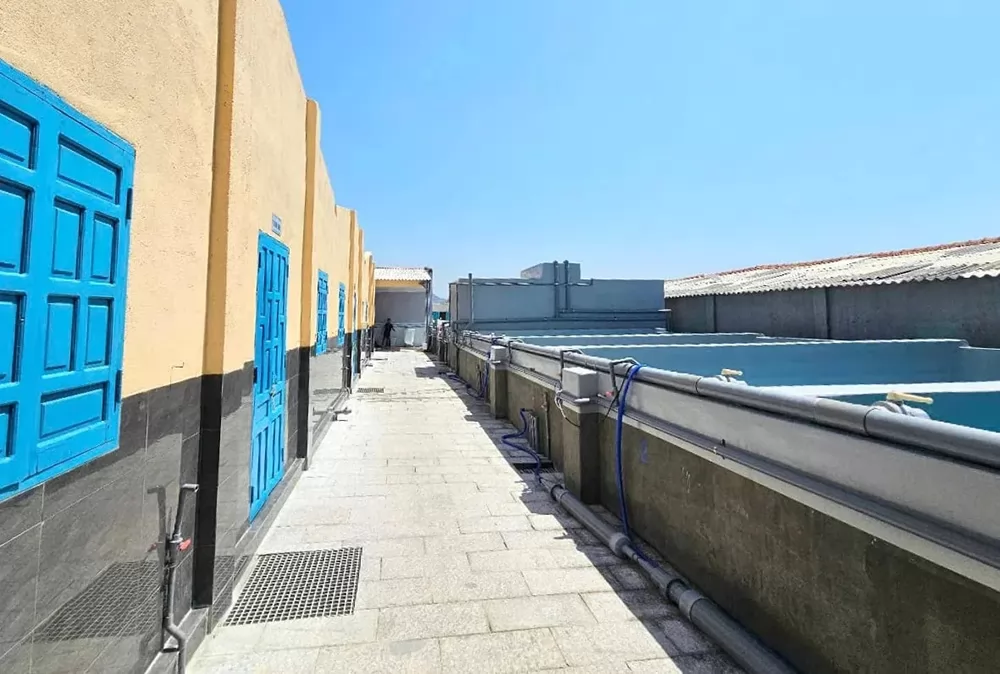
Ambition for high-tech shrimp seed hub: Firms master tech
(VAN) Applying RAS and AI helps local firms strictly control farming environments, producing highly resistant high-quality shrimp seeds.
Mekong district seeks to expand giant barb farming
KIÊN GIANG - Giồng Riềng District in Kiên Giang Province is expanding a breeding model for cá hô, or the giant barb, that offers farmers high incomes.