When American chickens knock on Indonesia's poultry industry
Update: Apr 11, 2026 - 14:30 (GMT+7)


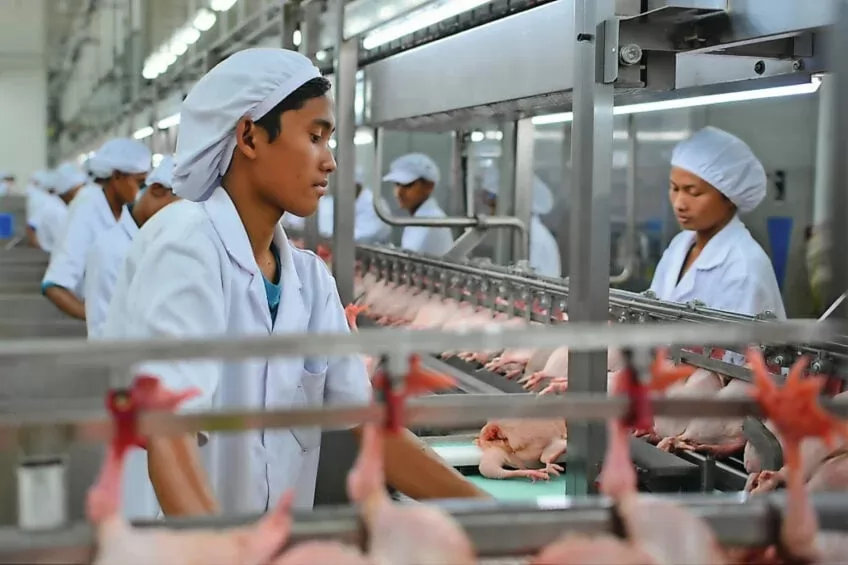
Indonesia's poultry industry has proven its remarkable capacity for growth. Image: Reve.
(VAN) Trade agreements often sound elegant when announced from a presidential podium. Terms such as 'market access', 'strategic partnership', and 'mutual prosperity' flow smoothly through diplomatic speeches.
When the Agreement on Reciprocal Trade (ART) was signed by Prabowo Subianto and Donald Trump, the narrative carried the same promise: broader markets, deeper economic cooperation, and stronger bilateral relations between Indonesia and the US.
From a diplomatic standpoint, the agreement may appear almost poetic. From the perspective of Indonesia’s livestock farmers, however, the poetry could read more like a cautionary tale. To understand why, one must first appreciate the scale of Indonesia’s poultry industry, an industry that is not merely large, but monumental.
One of the largest poultry industries in Asia
Chickens are by far the most abundant livestock species in the country. In 2025, Indonesia was home to around 3.92 billion chickens, including approximately 3.32 billion broilers and more than 426 million layer hens.
This is far from a small backyard sector. It is one of the largest poultry industries in Asia. The broiler sector alone produces millions of tonnes of meat every year. In 2024, Indonesia produced roughly 3.8 million tonnes of broiler meat, with production concentrated in major provinces such as West Java, Central Java, and East Java.
Meanwhile, the layer sector has also experienced remarkable growth. National egg production reached 6.31 million tonnes in 2025, the highest level recorded in 2 decades. In other words, Indonesia is not a poultry desert waiting to be filled with imported chicken. It is already a poultry powerhouse. Yet under ART, the doors of Indonesia’s poultry houses may soon open wider to products from abroad.
Among the products expected to gain easier access are chicken cuts such as chicken leg quarters and mechanically deboned meat from the US. For food processors, this development may sound like welcome news. Mechanically deboned meat is inexpensive, versatile, and widely used in processed products such as nuggets and sausages.
Fair trade?
For independent poultry farmers, however, the story may sound quite different. Imagine raising broilers in a country where feed prices fluctuate, market prices can collapse overnight, and periods of oversupply regularly test farmers’ resilience. Now imagine competing against imported poultry products originating from one of the most industrialised and efficient poultry systems in the world.
It is not exactly a fair boxing match.
The American poultry industry operates with economies of scale that most Indonesian farmers can scarcely imagine. Production costs are streamlined through massive integration, advanced genetics, and highly efficient feed systems. By contrast, many Indonesian poultry farmers continue to operate in a market where price volatility is simply part of everyday reality. The resulting competition hardly resembles a fair boxing match. It is closer to a traditional bicycle race, until one participant quietly replaces his bicycle with a high-speed train.
The irony is that this situation emerges at a time when Indonesia’s poultry industry has already proven its remarkable capacity for growth. In other words, production capacity is not the issue. Market stability is.
Poultry market imbalance and the fate of local players
For years, one of the most persistent challenges facing poultry farmers has been the imbalance between supply and demand. Periods of oversupply regularly push live bird prices below production costs, forcing many small-scale farmers into financial distress. Even government institutions have acknowledged the need for more effective market management to shield farmers from severe price fluctuations. Now imagine introducing a new variable into that already fragile equation: imported poultry products.
The concern is not merely theoretical. If imported raw materials become significantly cheaper, food processors may naturally shift toward those inputs. Market logic rarely pauses to consider the fate of domestic livelihoods.
The story becomes even more complex when one looks at the genetic foundation of Indonesia’s poultry industry. Despite its enormous production scale, the sector still relies heavily on imported breeding stock, particularly grandparent stock. These birds sit at the very top of the poultry production pyramid, meaning whoever controls them effectively influences the entire genetic supply chain. Here lies the paradox.
Indonesia proudly proclaims its ambition to achieve self-sufficiency in animal protein. Yet the genetic roots of its poultry industry remain largely dependent on imports. With ART potentially facilitating greater flows of breeding stock and poultry products, the country may find itself navigating an increasingly delicate balance between independence and dependency.
Another chapter of the broader livestock story
The cattle sector, for instance, has long struggled with structural inefficiencies, leaving domestic producers vulnerable to competition from imported beef. The dairy industry faces a similar challenge, continuing to depend heavily on imported milk powder to meet national demand.
Seen from this perspective, a sweeping trade agreement inevitably raises questions. Not necessarily about diplomacy – those calculations belong to the realm of geopolitics – but about the delicate balance between international trade and domestic resilience.
Large integrated companies may be able to adapt relatively quickly. Their scale, capital resources, and integrated supply chains provide a certain degree of protection against market turbulence.
Small farmers, however, rarely enjoy such advantages. For them, livestock farming is not merely an industry statistic. It is a livelihood measured in sacks of feed, electricity bills, and the uncertain price of live birds at the farm gate.
Will there be a sobering realisation?
Trade agreements such as ART may indeed strengthen international partnerships. Yet if policymakers are not careful, such agreements could also expose domestic farmers to competition that arrives faster than the industry can realistically adapt to.
Indonesia’s livestock sector does not fear globalisation. What it fears is globalisation without preparation. Otherwise, the country may soon face a quiet irony. Indonesia’s chicken population will continue to grow by the billions. Farmers will keep tending their poultry houses with dedication. Production statistics will remain impressive in official reports.
And yet the market those farmers depend on could gradually be filled with poultry products that have traveled thousands of miles across the Pacific. When that moment comes, Indonesian farmers may look around their poultry houses and arrive at a simple, sobering realisation: the chickens are still ours. But the market, may no longer be.
HD / PW
Maybe you are interested
Tra fish fry production to use more new technologies
Tra fish fry breeders should apply more new technologies to increase survival rates and reduce reliance on natural water resources, Phùng Đức Tiến, deputy Minister of Agriculture and Rural Development, said.

Mekong Delta to expand shrimp - rice farming model
HCM CITY — The shrimp - rice farming model in the Cửu Long (Mekong) Delta will offer farmers greater benefits when all related stakeholders work together to improve its value and protect the environment...

Mekong Delta: Pangasius exports manage to overcome the bend
(VAN) The pangasius export market is suffering a fall to a low point. Pangasius farmers reduce stocking when they are balancing supply and demand, aiming to regulate production to overcome the crisis cycle.