3D turkey gut model created to fight blackhead disease
Update: Dec 06, 2025 - 14:19 (GMT+7)


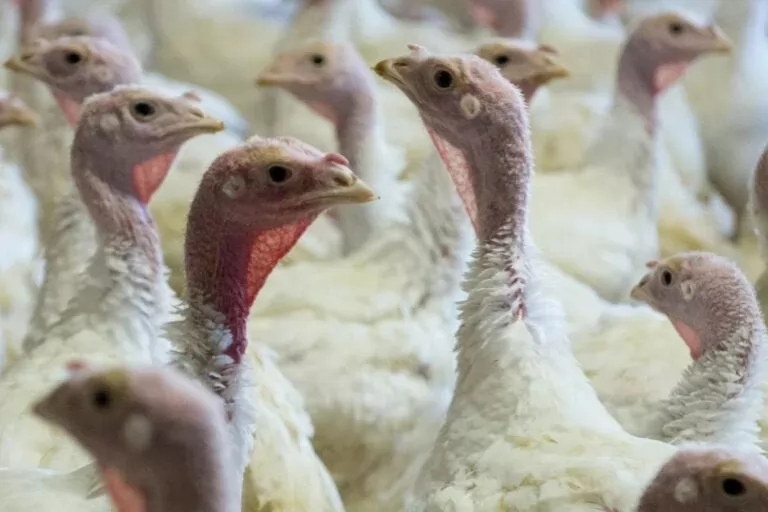
Blackhead disease is caused by a tiny parasite that attacks a bird's gut and spreads quickly. It can cause mortality rates of up to 80%. Photo: Marcel van Hoorn.
(VAN) Hopes are growing that the creation of the first 3D turkey gut model could be a turning point in the battle against the virulent blackhead disease.
Blackhead disease is caused by a tiny parasite, Histomonas meleagridis, which attacks a bird’s gut and spreads quickly, resulting in mortality rates of up to 80%. Researchers have found it difficult to combat the disease due to being unable to study it outside of live birds.
However, Texas A&M College of Agriculture and Life Sciences undergraduate Leila Chang has solved this by helping build the first 3D turkey cecal organoids, a long-sought tool for understanding and fighting disease.
Sustainable, animal-free platform for experiments
Working with associate professor in the Department of Poultry Science, Prof Yuhua Farnell, the pair built organoids from turkey cecal crypts, which are small structures that contain stem cells responsible for generating new intestinal cells, which are essential for digestion and immune defence.
The team started with cecal crypt isolation from embryonic day-22 turkeys and embedded the cells in a Matrigel that mimics tissues structure, giving cells the structure and nutrients they need to form 3D shapes.
They then fed them with a nutrient rich liquid that delivers sugars, proteins, vitamins and growth signals the cells need to form organoids. The team tracked their development under a microscope and cryopreserved the culture for future use.
They found a way to preserve the organoids for long-term use, so that they can now be thawed and reused, providing a sustainable, animal-free platform for experiments on turkey intestinal health.
Practical study and testing without animals
This model allows researchers to study disease processes and test potential treatments without relying on live birds, helping advance scientific discovery while supporting animal welfare and reducing the need for traditional animal testing.
They believe the breakthrough changes turkey research. The cecum, a pouch in the lower intestine that helps break down food and supports immune defence, is the primary site of infection in turkeys, which is why an effective cecum model matters. Live bird studies are costly and slow. The organoids bridge that gap by recreating key features of turkey gut tissue, allowing researchers to target blackhead disease.
For producers, the implications are practical. A lab model lets scientists test possible solutions in the dish first. They can try candidate drugs, vaccines, probiotics, feed additives and management steps to see what helps before the disease ever reaches a barn. The model can show how the parasite harms tissue, how biosecurity measures hold up and which ideas deserve field trials.
The researchers say the same platform can support research on other intestinal pathogens, nutrition, the microbiome and management practices that affect poultry gut health. Faster results and clearer readouts can reduce dependence on live birds and speed progress toward better flock health.
H.D
(Poultryworld)
Maybe you are interested
Intensive farming and the risk of new pandemics
Intensive livestock farming could raise the risk of new pandemics, according to researchers.
Tackling challenges in poultry health, welfare, and sustainability
Researchers at the University of Chester are working to improve bird welfare, production and sustainability in the industry with innovative solutions through 2 partnership projects involving substantial UK government funding.
Localities put on alert for livestock diseases
HÀ NỘI — Prime Minister Nguyễn Xuân Phúc has called on ministries, Government agencies and local authorities nationwide to roll out precautionary measures to stop poultry and cattle diseases.