Seafood exports: The challenge of sustaining growth after hitting the $11 billion mark
Update: Jan 10, 2026 - 15:49 (GMT+7)



Shrimp exports in 2025 reached $4.65 billion, a 20% increase compared to 2024. Photo: Hong Tham.
(VAN) The record export value of $11 billion in 2025 has given a strong boost to the seafood industry. In 2026, the challenge is to maintain growth momentum amid mounting market barriers and intense competition.
Figures reflecting resilience, innovation, and the aspiration to rise
According to the Vietnam Association of Seafood Exporters and Producers (VASEP), Viet Nam's total seafood export turnover in 2025 reached nearly $11.35 billion, a 13.1% increase over the same period last year.
Among the sectors, shrimp continues to play the leading role. For the full year of 2025, shrimp exports reached $4.65 billion, up 20% compared to 2024, accounting for the largest share of total turnover. Notably, lobster is playing an increasingly significant role in the shrimp industry, with export earnings of $817 million, more than doubling compared to the previous year.
Pangasius ranked second with an export turnover of $2.19 billion, an 8% increase. This sector experienced a "luckier" year compared to others in terms of market conditions, as anti-dumping duties in the United States were more favorable.
The "other marine fish" group reached $2.16 billion, up 12.2%, continuing to be a major contributor thanks to its large scale and market diversity. Squid and octopus recorded significant growth with an export turnover of $764.4 million, up 16.3%. Conversely, tuna was the only group to see a decline, falling to $913 million (down 7.6%) due to the prolonged impact of raw material shortages and stringent regulations against Illegal, Unreported, and Unregulated (IUU) fishing.
In a congratulatory letter expressing gratitude for the efforts of the seafood business community, Mr. Do Ngoc Tai, Chairman of VASEP, shared: "2025 has concluded with many memorable milestones for Vietnam's seafood industry. Amidst intense global market fluctuations, geopolitical instability, rising trade barriers, and increasing production and compliance costs, the Vietnamese seafood business community has remained resilient in overcoming difficulties, adapting flexibly, and proactively seizing opportunities."
"The export result, which surpassed the $11 billion mark for the first time, is a clear testament to the resilience, innovative spirit, and aspiration to rise of the entire industry," the VASEP Chairman emphasized.
Identifying challenges for 2026
Entering 2026, Viet Nam’s seafood industry continues to face intertwined challenges. The slow recovery of the global market, combined with geopolitical conflicts and rising trade protectionism, has led to unstable demand. Input costs, particularly for feed, energy, and logistics, remain high, while requirements for traceability, environmental standards, and labor are becoming increasingly stringent. Competition from major producing nations like Ecuador and India continues to pressure prices and market share, forcing businesses to restructure and enhance added value.
Tariff policies, trade measures, and technical barriers from the United States may continue to make global exporters cautious, prompting them to consider market shifts. This trend simultaneously creates immense competitive pressure in other markets such as the EU, China, ASEAN, and the Middle East.
The two main export commodities, shrimp and pangasius, face specific hurdles. Notably, shrimp exports to the EU are clearly impacted by animal welfare requirements. Starting in 2026, many major retail chains in the EU and the UK will require warm-water shrimp to be fully stunned (usually electrically) before being iced, replacing traditional cold-shock methods. This regulation has been integrated into the procurement policies of retailers such as Tesco, Marks & Spencer, Sainsbury’s, and Waitrose, serving as a direct condition for maintaining supplier status.
What sets this barrier apart is that it cannot be resolved through mere paperwork or certification. Businesses are forced to reinvest in harvesting and pre-processing technologies, overhaul operational procedures, and exercise stricter control over the live shrimp transportation phase. The investment cost for an electrical stunning line is substantial, especially in a context where profit margins in the shrimp industry are increasingly being squeezed.
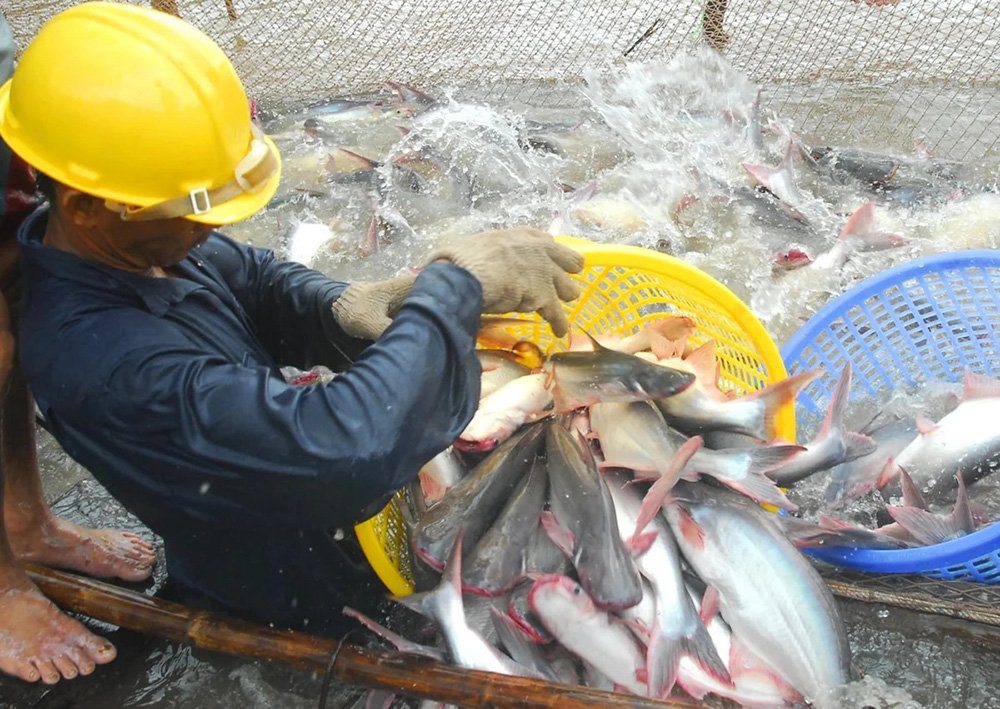
The Vietnamese pangasius industry is facing an urgent need to transform its development mindset, adopting quality, value, and sustainability as its guiding principles. Photo: VAN.
As for pangasius, the industry continues to face certain difficulties. Although pangasius farming in the Mekong Delta has restructured production and applied advanced technologies, it remains heavily affected by climate change, which leads to increased disease outbreaks, poor water quality, and saline intrusion. The inconsistent quality of fingerlings has resulted in low survival rates, while erratic weather patterns make fish more susceptible to out-of-season diseases. Antibiotic and disease control efforts are not yet truly sustainable, posing potential risks to public health and the industry's reputation. Production costs have risen to $1.2 - 1.3/kg, diminishing competitiveness.
Furthermore, the 20% countervailing duty in the U.S. market is forecasted to continue having an adverse impact, weakening the competitiveness of Vietnamese pangasius products in this market.
Additionally, competition from countries such as Bangladesh, Indonesia, and China is putting immense pressure on pangasius exporters. Challenges from technical barriers, such as Points of Raw Material (POR), the Farm Bill, and increasingly stringent regulations on labor, the environment, and green credits, are also intensifying.
In addition, the EU's IUU "yellow card" and the United States' intensified enforcement of the Marine Mammal Protection Act (MMPA) continue to be major hurdles for Vietnamese seafood.
It can be said that the record export achievement of 2025 is a significant bright spot for Vietnam's seafood industry; however, it also presents a major challenge for 2026 amid increasing policy risks, intensifying competition, and more stringent market requirements. Nevertheless, these very pressures provide an opportunity for the seafood sector to undergo a powerful transformation: shifting from quantity-based growth to in-depth development, and from price-based competition to competing through quality, sustainability, and responsibility.
As market standards rise, businesses that invest for the long term, operate professionally, and integrate closely with the value chain will have the chance to break through. This will create the foundation for a more adaptive and greener seafood industry, firmly asserting its position on the global map.
Author: Hong Tham
Translated by Phuong Linh
Maybe you are interested


The rate of external parasites among pets in Vietnam surges
Ensuring environmental sanitation is crucial for preventing and treating skin diseases in pets. However, Vietnam has not yet fulfilled this requirement.
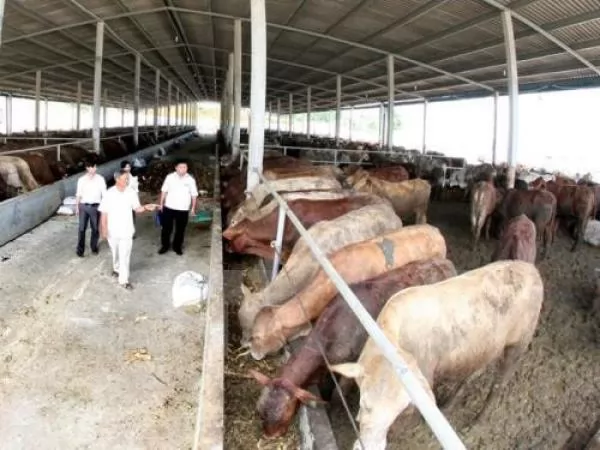
Cow breeding yields high income for farmers in Tiền Giang
Viet Nam News / HCM CITY — Farmers who breed oxen and raise cows in the Cửu Long (Mekong) Delta province of Tiền Giang have greatly improved their income.
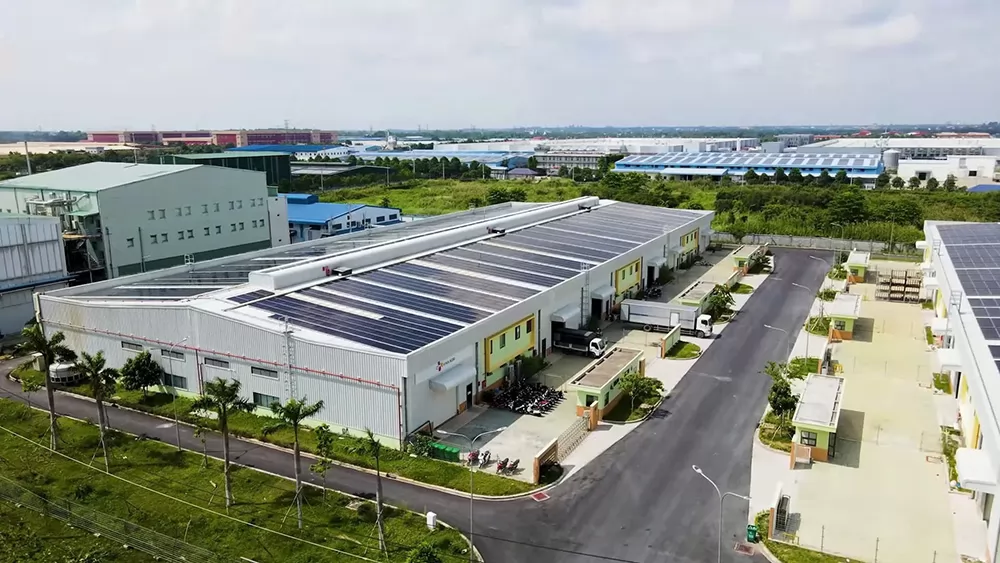
CJ Feed&Care: optimizing FCR, shaping the future of Vietnam's livestock industry
CJ Feed&Care officially launched the FCR improvement campaign called “2025 Find Challenge Reach” in April 2025. In Vietnam, this campaign is implemented by CJ Vina Agri.