Vĩnh Long targets $107m in aquaculture
Update: Jul 30, 2022 - 14:23 (GMT+7)


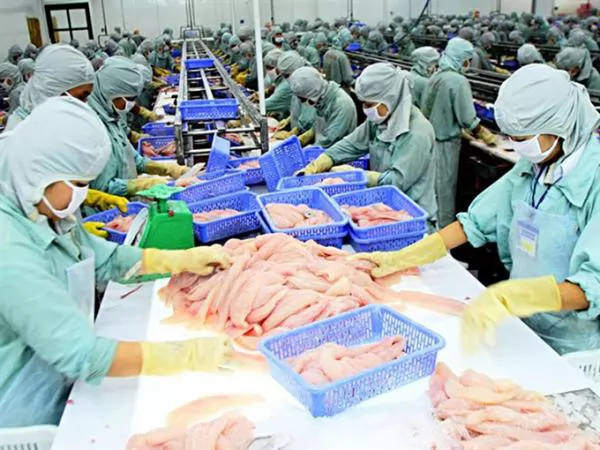
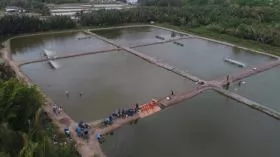
Vĩnh Long Province has set a target this year of VNĐ2.45 trillion (US$107.67 million) worth of aquaculture production. Photo angiang.gov.vn
The Cửu Long (Mekong) Delta province of Vĩnh Long has set itself an aquaculture production target for this year of more than 112,500 tonnes worth VNĐ2.45 trillion (US$107.67 million).
HCM CITY — The Cửu Long (Mekong) Delta province of Vĩnh Long has set itself an aquaculture production target for this year of more than 112,500 tonnes worth VNĐ2.45 trillion (US$107.67 million).
The focus will be on food safety through the consumption chain.
To achieve the target, the province plans to diversify its products to ensure each is bred in a suitable area and also farmers can adapt to climate change.
The province will resume pangasius farming in areas where it has been suspended or other valuable species, including freshwater fish and eels.
It will develop intensive aquaculture on salt fields of species of high economic value such as mackerel, yellow catfish, prawn, anchovy and eel in districts affected by saline intrusion such as Vũng Liêm, Trà Ôn and Bình Tân.
It will also improve production methods to ensure harmonisation of benefits for farming, purchasing, processing and export.
It will encourage farmers to use advanced production models to ensure food safety.
The province will help producers find buyers in the form of signing contracts with distributors such as wholesale markets and distribution centres in trade centres and supermarkets.
It will also strengthen trade promotion activities for local fishery products and introduce advanced breeding processes.
Vĩnh Long has more than 257 hectares of farms breeding pangasius with GlobalGAP, ASC, and VietGAP certification.
There are two fish breeding facilities of GlobalGAP standards on a total area of 6.3ha.
However, the aquaculture sector faces several challenges such as small scale production and weak linkages between production and consumption.
Besides, the products are mainly consumed in fresh form. There are few or no enterprises investing in creating added-value products.
Investment in the sector is limited and not commensurate with the demand and growth objectives.
The price of pangasius has remained low for a long time, causing losses for local businesses and farmers. — VNS
Maybe you are interested
CJ Feed&Care: optimizing FCR, shaping the future of Vietnam's livestock industry
CJ Feed&Care officially launched the FCR improvement campaign called “2025 Find Challenge Reach” in April 2025. In Vietnam, this campaign is implemented by CJ Vina Agri.
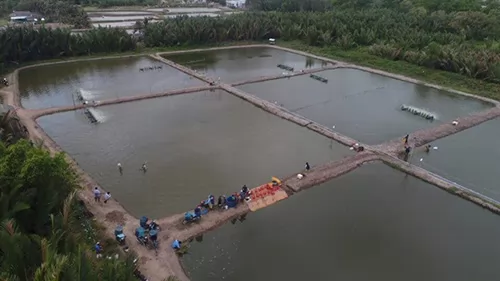
Bạc Liêu expands sustainable shrimp farming
BẠC LIÊU - Aquaculture production in the Cửu Long (Mekong) Delta province of Bạc Liêu, particularly high-tech shrimp cultivation, has developed well in recent years because of investments in several kinds of farming models, according to the province's Department of Agriculture and Rural Development.
Vietnam taps into growing Australian demand for shrimp
Amid tariff risks and growing trade barriers in the U.S. market, Australia is emerging as a promising destination to sustain the growth momentum of Vietnam's shrimp exports.