Newcastle disease spreads rapidly in Germany
Update: Apr 04, 2026 - 15:46 (GMT+7)


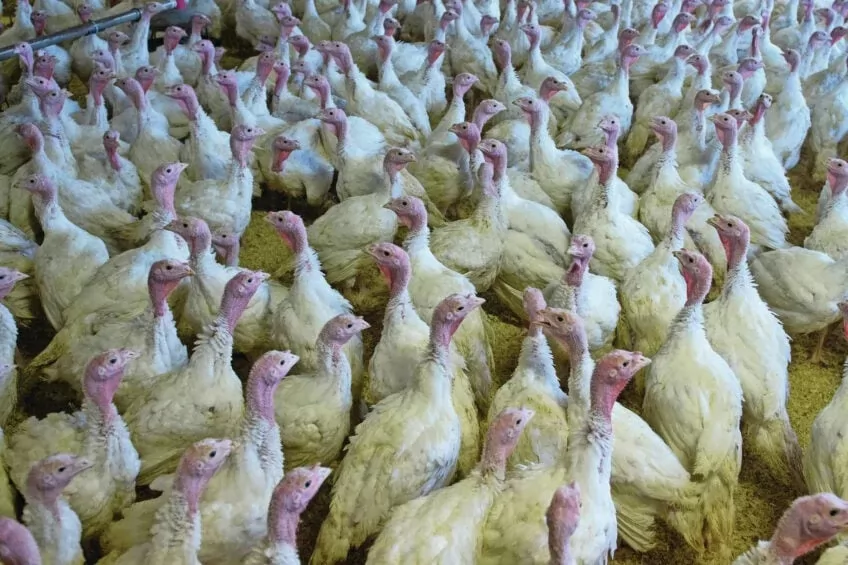
In Germany, it was observed that older fattening turkeys, which had already been immunised several times, were protected from the disease. Photo: Marcel van Hoorn.
(VAN) Since the first case was discovered on 20 February – the first such case in 30 years – the number of cases in Germany has risen to 40 as of 24 March.
“This affects both large-scale commercial farms with laying hens, turkeys and broiler chickens as well as small-scale operations, such as hobby farms. While we do not have exact figures, over 2 million animals have either died or been culled as part of disease control measures,” a spokesperson tells Poultry World.
Border regions under pressure
So far, the outbreaks are concentrated in the border regions with Poland and Czechia, where the first outbreaks of Newcastle disease were reported in 2024. In those Eastern border regions, the infection pressure increased strongly in the first months of this year, FLI said during a webinar. “We need massive and comprehensive measures to prevent an uncontrollable further spread of the virus,” expert Dr Carola Sauter-Louis said.
A virus genotype already circulating in Eastern Europe
The Newcastle disease viruses detected so far belong to genotype VII.1.1. This genotype has been circulating since 2023, especially in Eastern European countries.
In a first outbreak in Germany, it was observed that older fattening turkeys, which had already been immunised several times, were protected from the disease.
In young turkeys that had not yet built up sufficient active immunity, the infection process initially started slowly with non-specific symptoms. After about 10 days, there were massive animal losses and typical clinical manifestations, such as respiratory changes, diarrhea with greenish faeces and sometimes also central nervous system symptoms, FLI explains.
Delayed symptoms make detection harder
This delayed manifestation of clinical symptoms poses a particular risk of undetected spread of the virus. German poultry holders are advised to closely monitor their animals and their performance and report any abnormality as soon as possible to the relevant authorities. Even in small populations, suspicions must be communicated transparently, direct and indirect contact between animal populations must be reduced to a minimum, and appropriate protective measures must be taken to prevent possible pathogen introductions, according to the institute.
Vaccination remains the main defence
Vaccination is a central pillar of Newcastle disease control. In Germany, there is a general Newcastle disease vaccination requirement for kept turkeys and chickens. The veterinary vaccination commission StlKoVet assumes that the vaccines used so far, which are mainly based on viruses of genotypes 2.II and 2.I, also protect against genotype VII.1.1. A 2-stage vaccination is recommended, consisting of several basic immunisations with a live vaccine via drinking water or eye drops followed by an injection vaccination with an inactivated vaccine. In larger farms, the administration of live vaccines by coarse spray has also proven effective.
Farmers urged to tighten biosecurity
The current situation is worrying, FLI warns. The StIKo Vet therefore advises chicken farmers to check when their birds were last vaccinated against Newcastle disease and, in case of doubt, to schedule repeat vaccinations, or to pay particular attention to the regular vaccinations.
HD / (PW)
Maybe you are interested
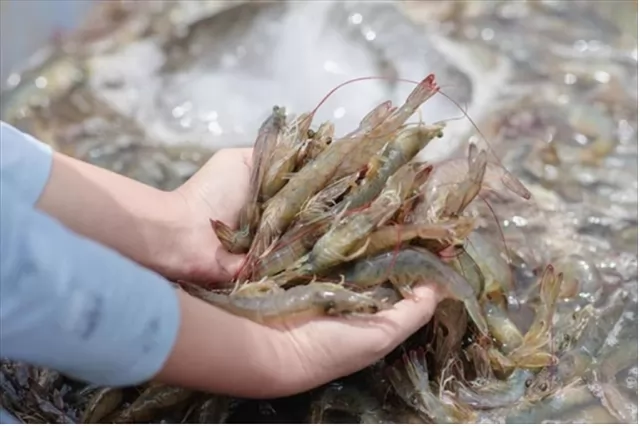
Shrimp industry needs solutions to achieve export target this year
In the beginning of June, shrimp selling prices plummeted by about 40 per cent compared to April. Meanwhile, the cost of shrimp seed and feed increased. Those have caused shrimp farmers in the Mekong Delta to suffer heavy losses.
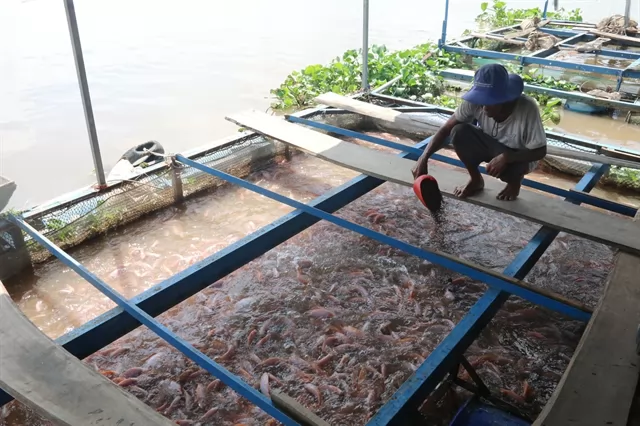
Tiền Giang develops aquaculture
Tiền Giang Province is promoting aquaculture by teaching farmers breeding techniques and encouraging them to use advanced techniques using intensive methods.
![[Last article]: Turn Hai Phong into a seafood processing centre](https://en.thuocthuydiemuyen.vn/upload/images/nam-2024/thang-01/20012024-133457-22488-a267e9e39612.webp)
![[Last article]: Turn Hai Phong into a seafood processing centre](https://en.thuocthuydiemuyen.vn/upload/images/nam-2024/thang-01/thumbs/20012024-133457-22488-a267e9e39612.webp)
[Last article]: Turn Hai Phong into a seafood processing centre
To fully exploit the huge and rare potential, Hai Phong has re-planned the farming area and plans to become a key seafood processing centre.